How do you stay fire-safe under a thatched roof?
Living safely with a thatched gazebo comes down to three things: building fire protection into the structure, designing the space so heat sources sit well away from the thatch, and simple everyday habits. Keep barbecues, fire pits and heaters clear of the roof, use outdoor-rated electrics and lighting, never leave open flames unattended, and keep your fire-retardant treatment up to date. Do that, and a thatched space can be enjoyed with confidence.
Fire has always been the main concern with thatch, and it is a fair question to ask. Untreated natural thatch is combustible, so the risk is real. It is also very manageable. Here is how to keep your thatched gazebo safe day to day.
Start with a protected structure
Fire safety begins before the first barbecue. Cape Reed builds protection into its thatched roofs in layers:
- Dense reed: cape reed (Thamnochortus insignis) is a dense reed with a natural silica-like outer layer.
- FireBloc cloth: a fire-retardant cloth, rated to resist up to 500°C, woven through the thatch during construction.
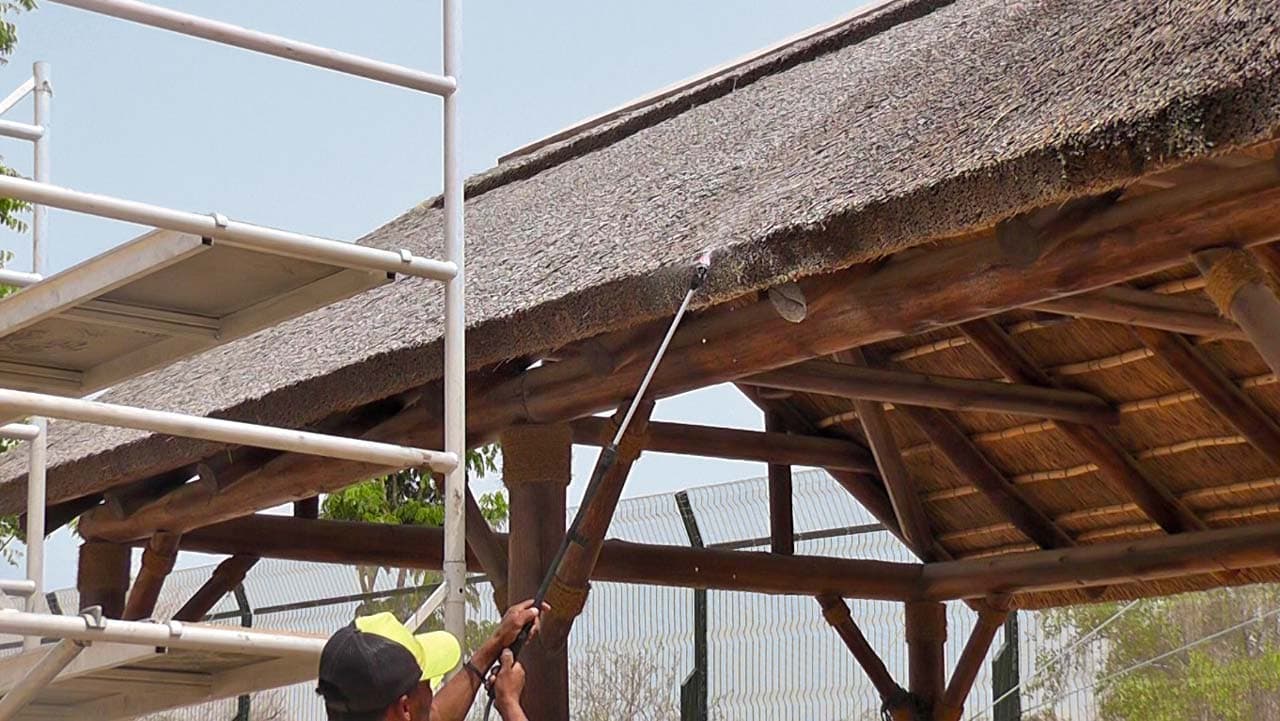
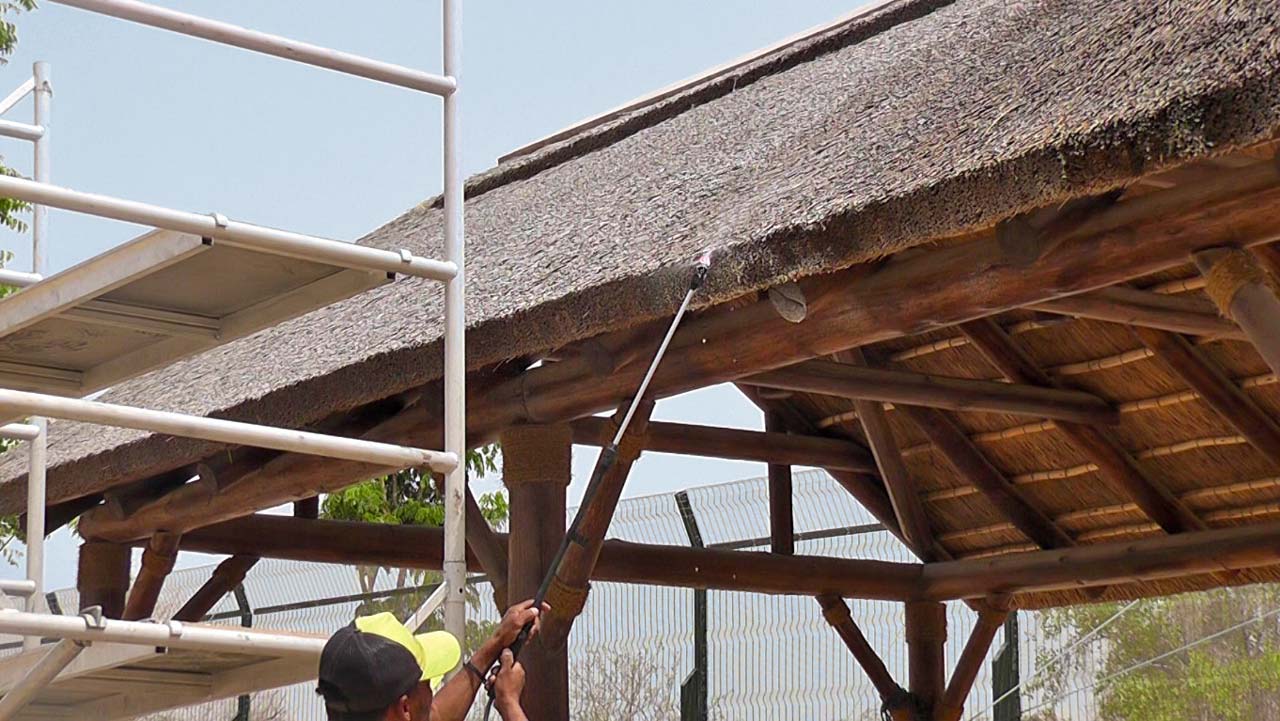
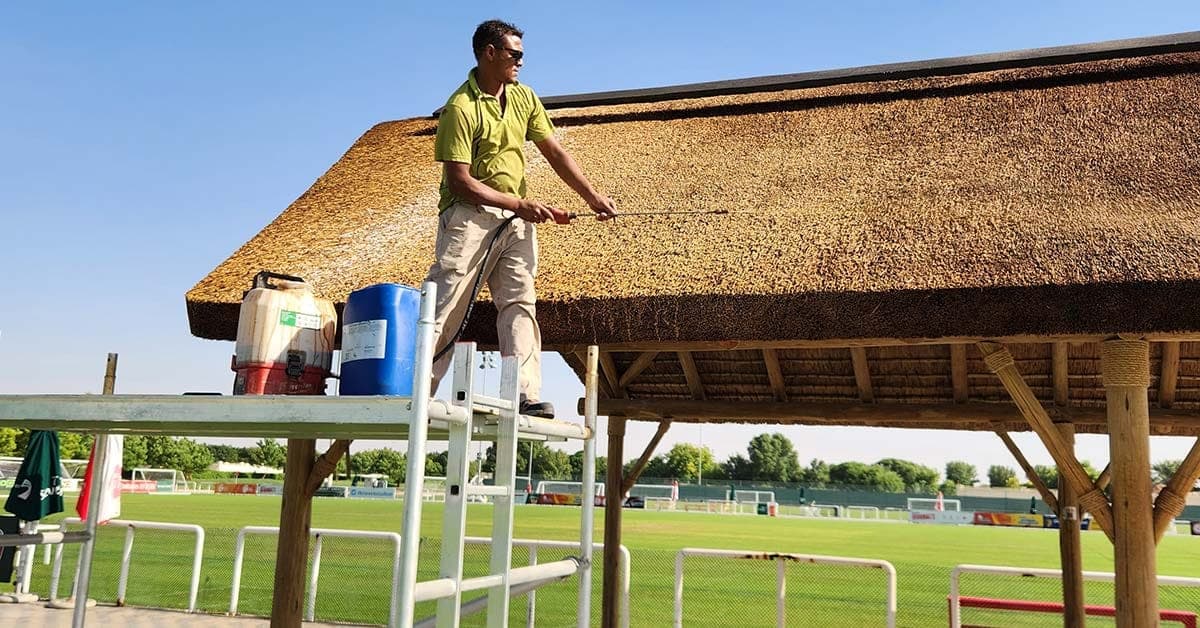
- Fireshield coating: a certified fire-retardant spray applied to external and internal surfaces of thatch and timber.
Read How Fireshield Works for the full system, and Is Thatched Roofing Fire-Safe? for why treatment matters.
Barbecues and outdoor kitchens
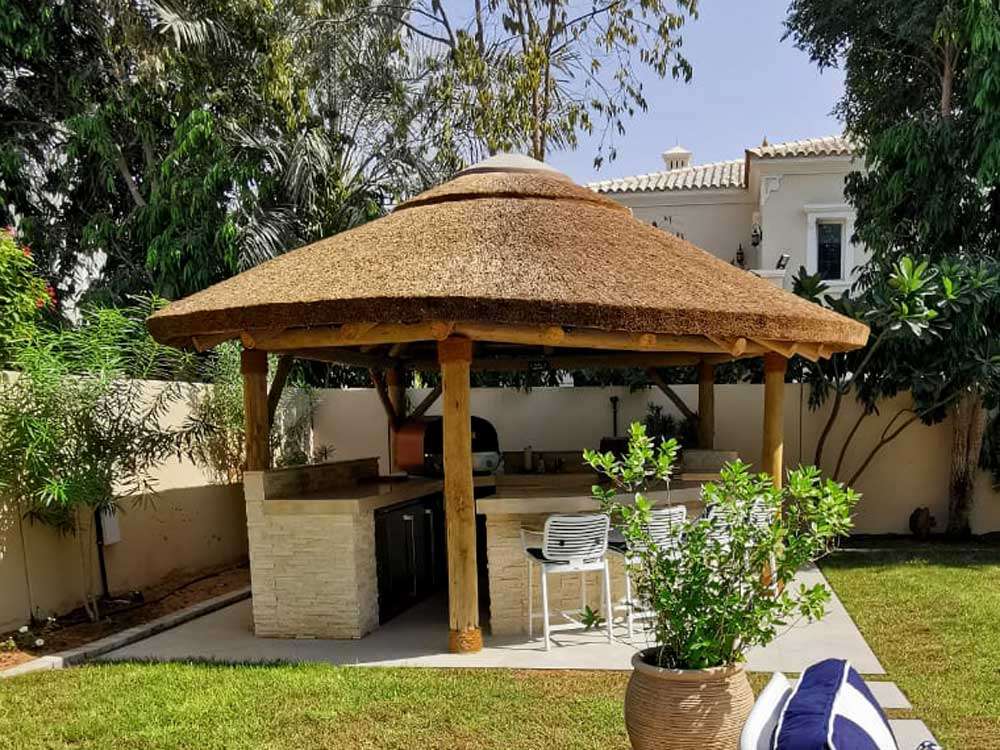
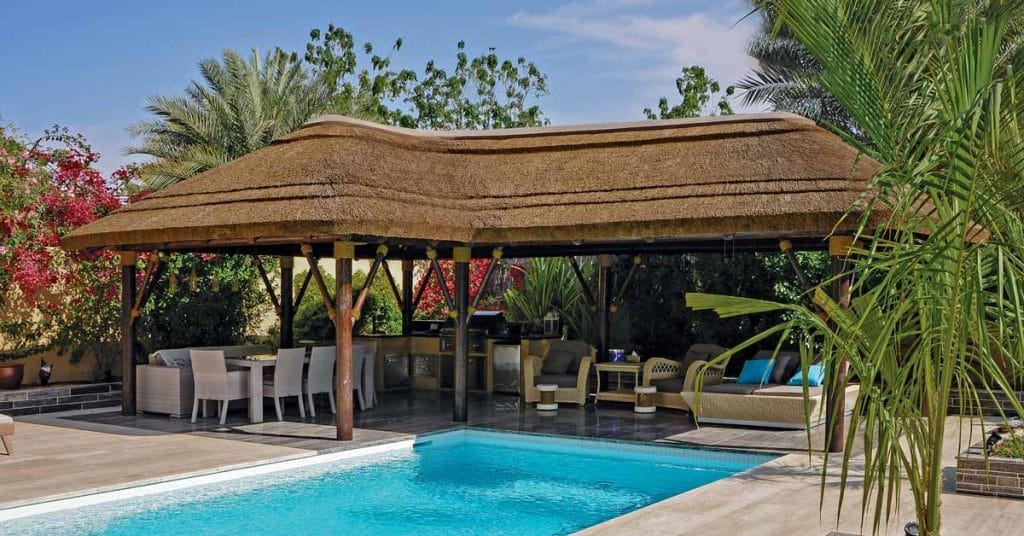
Barbecues are the most common heat source near a thatched gazebo. Position freestanding barbecues out in the open, well clear of the roof edge, where heat, sparks and smoke rise into open air rather than into the thatch. If you want cooking under the roof, plan it as a designed outdoor kitchen from the start, with your Cape Reed team, so layout, extraction and fire protection are built in rather than improvised.
Fire pits and open flames
- Keep fire pits in open areas, well away from the gazebo and any overhanging thatch.
- Never light a fire pit or chiminea under a thatched roof.
- Avoid open-flame torches and candles near the thatch. Choose LED alternatives for ambience.
- Make sure fires are fully out before leaving them.
Patio heaters
Patio heaters radiate heat upward and outward. Keep them well away from the underside of the roof, and follow the manufacturer's clearance guidance. Where possible, choose heating designed for covered spaces and ask your Cape Reed team for advice before adding any heater under thatch.
Lighting and electrics
- Use outdoor-rated fittings and cabling installed by a qualified electrician.
- Choose LED lighting, which runs much cooler than halogen or incandescent bulbs.
- Keep light fittings from touching the thatch.
- Check cables and connections regularly for wear.
Everyday habits
- Do not smoke directly under or beside the thatch, and provide an ashtray well away from the roof.
- Keep the area around the gazebo clear of dry leaves and debris.
- Keep a fire extinguisher or fire blanket close by.
- Make sure guests know the house rules about flames near the roof.
Keep protection up to date
Fire-retardant coatings wear with sun and weather, so book re-treatment at the end of each protection period and include fire safety in your annual roof inspection. Our maintenance guide explains the routine.
Frequently asked questions
Can I have a barbecue under a thatched gazebo?
Freestanding barbecues should stay out in the open, clear of the roof. Cooking under thatch should only happen in a purpose-designed outdoor kitchen planned with fire protection from the start.
Are thatched roofs more prone to fire?
Untreated thatch is combustible. With fire-retardant treatment, good design and sensible habits, the risk is significantly reduced.
Do fire-retardant treatments change the look of the thatch?
Fireshield FRC 101 dries clear, so thatch keeps its natural appearance.
Is there insurance for thatched structures?
Many insurers cover thatched structures, and some require fire-retardant treatment first. Speak to your insurer about their requirements.
Conclusion: enjoy your thatch with confidence
A thatched gazebo can be the heart of outdoor living, barbecues and all, when fire safety is built into the structure, the layout and your everyday habits. Treat the roof, keep heat sources clear, and keep protection current.
Want advice on fire safety for your thatched space? Talk to the Cape Reed team or learn more about Fireshield.

About Cape Reed Team
Our expert team at Cape Reed Spain brings decades of experience in sustainable thatching and premium outdoor living solutions.
You Might Also Like
Discover more outdoor living inspiration

How to Maintain a Thatched Roof in Hot, Dry Climates
How do you maintain a thatched roof in a hot climate? It comes down to four habits: a professional inspection at least o...
Is Thatched Roofing Fire-Safe? What to Know About Fire-Retardant Treatments
Is thatched roofing a fire risk? Untreated natural thatch is combustible, like most organic roofing and building materia...
Pergola vs. Thatched Roof: Which Suits Your Dubai Outdoor Space?
Pergola or thatched roof — what’s the real difference? The core difference comes down to shade and enclosure: a pe...