How does Cape Reed Fireshield work?
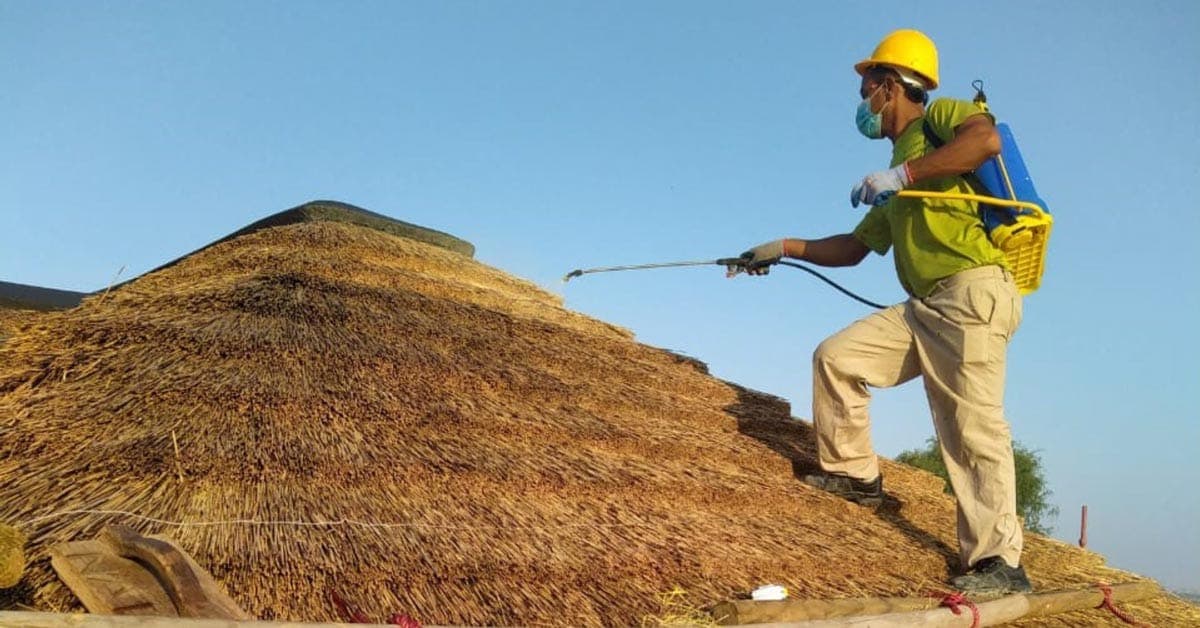
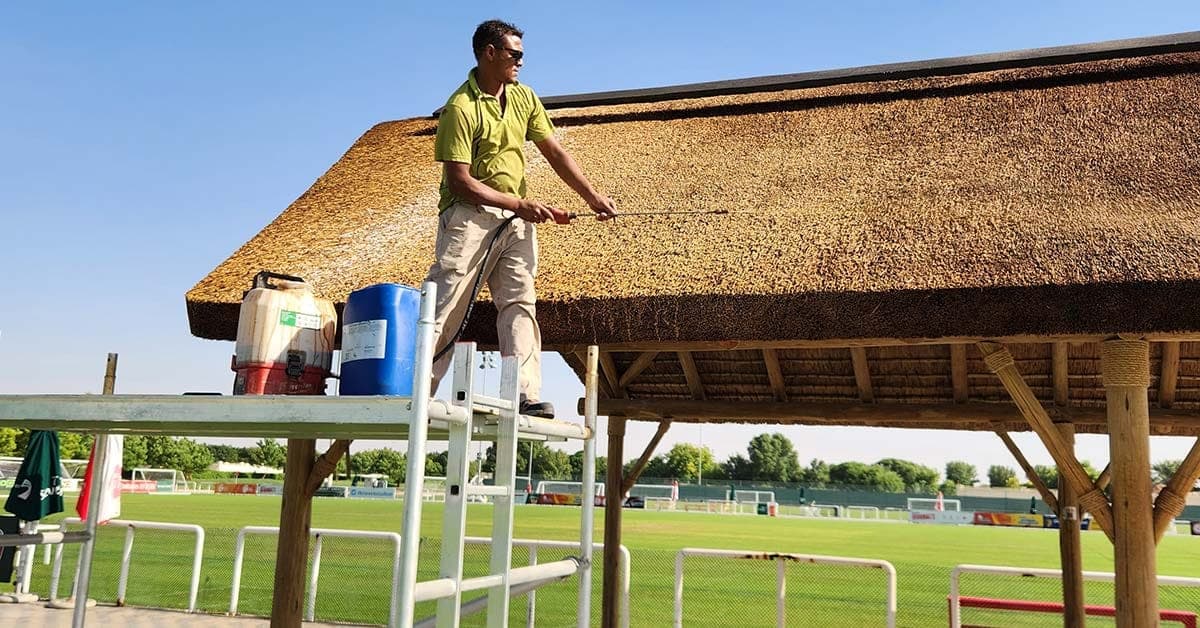
Cape Reed Fireshield protects natural structures in two layers. During construction, a fire-retardant cloth called FireBloc, rated to resist temperatures of up to 500°C, is woven through the thatch. Then a water-based intumescent coating is sprayed onto the thatch and timber: FRC 101 for thatch, reed and barasti, and FRC 102 for timber. When exposed to heat, an intumescent coating swells to form a protective, insulating layer that slows ignition and flame spread. Together, the system achieves a B-Roof (t1) fire rating.
Natural thatch and timber are combustible when untreated, like most organic building materials. Fireshield is how Cape Reed makes them significantly safer without losing their natural look. Here's how each part works.
Layer 1: FireBloc underlay, built into the roof
FireBloc is a fire-retardant cloth woven continuously through the thatch as the roof is built. Rated to resist temperatures of up to 500°C, it forms a barrier within the roof itself. Because it is installed during thatching, FireBloc is part of new Cape Reed roofs. Existing roofs are protected with the surface coatings below.
Layer 2: Fireshield surface coatings
Fireshield coatings are sprayed onto the external and internal surfaces of a structure. Two formulations cover different materials:
| Fireshield FRC 101 | Fireshield FRC 102 | |
|---|---|---|
| Designed for | Thatch, reed and barasti roofs and structures | Timber structures, hard and soft woods (not flooring) |
| Appearance | Milky when applied, clear when dry | Matt white finish |
| Application | Spray | Spray |
| Protection period | Three years | Five years |
Both are water-based, contain no toxic elements and are safe for users and the environment.
What fire ratings does Fireshield achieve?
The Fireshield system offers an overall B-Roof (t1) fire rating under UK Standard BS 476 Part 3 and European Standard EN 13501-5, and meets Dubai Civil Defence standards. The product is made by a specialist manufacturer of fire retardants for natural materials, with an ISO 9001-certified manufacturing process that is independently audited.
Where can Fireshield be used?
- Thatched and reed roofs
- Barasti roofs and structures
- Timber pergolas, gazebos, cabanas and other timber structures
- Other natural substrates, on advice from our team
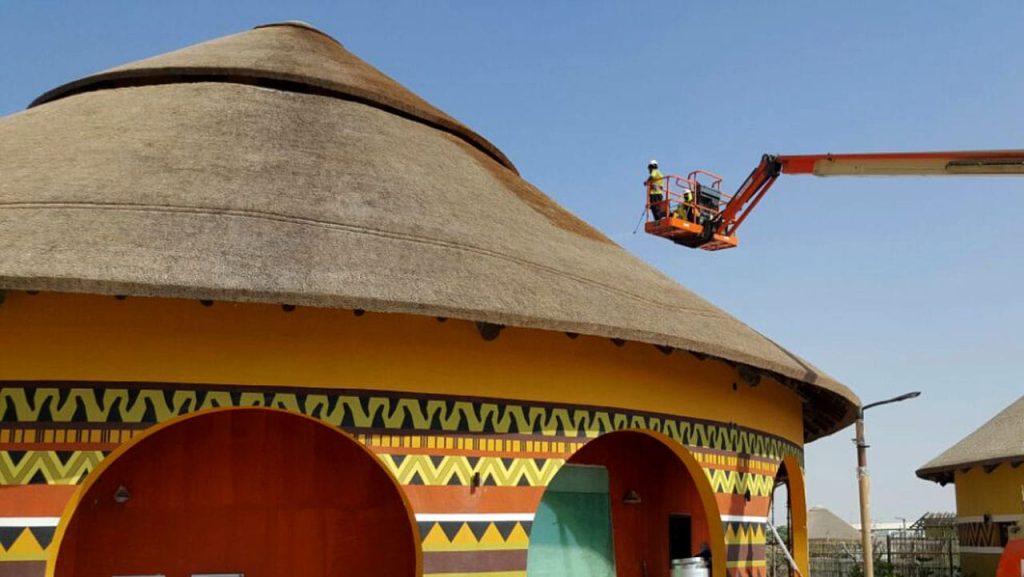
It is used by private homeowners and across hospitality, leisure, entertainment and landscaping projects, including resorts, beach clubs and restaurants.
When does Fireshield need re-treatment?
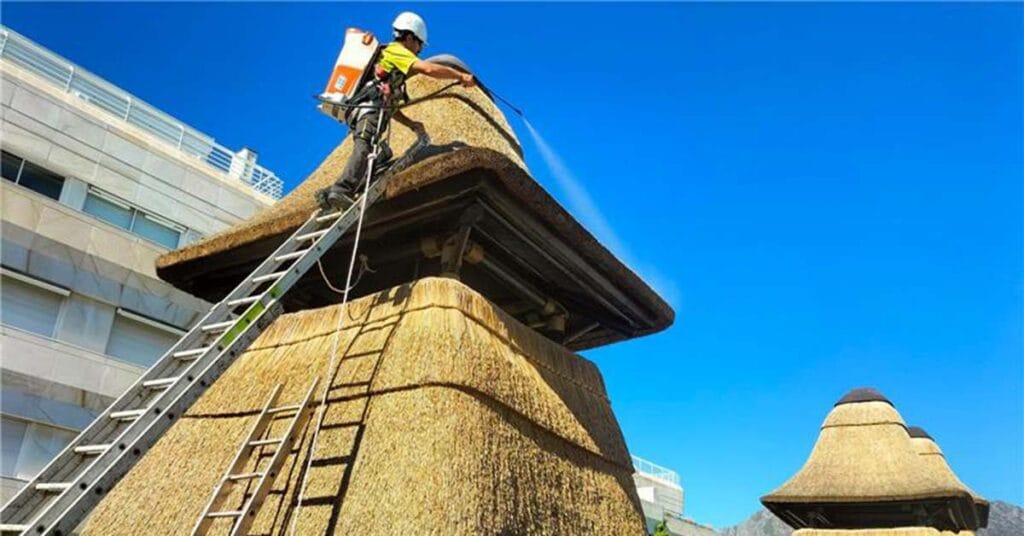
Sun and weather wear any surface treatment over time, so coatings are reapplied at the end of their protection period: every three years for FRC 101 on thatch and every five years for FRC 102 on timber. Build re-treatment into your annual inspection routine. Our thatched roof maintenance guide explains how.
Why treat a natural structure?
- Safety: slower ignition and flame spread give people more time to respond.
- Insurance: many insurers require natural structures to be treated before they will provide full cover.
- Compliance: commercial and hospitality projects often need certified fire protection.
- Peace of mind: especially where barbecues, fire pits and outdoor kitchens are close by.
For the bigger picture, read Is Thatched Roofing Fire-Safe? For everyday habits that keep a thatched space safe, see Fire Safety Around a Thatched Gazebo.
Frequently asked questions
Does Fireshield change how thatch looks?
FRC 101 dries clear on thatch, so the natural look is preserved. FRC 102 leaves a matt white finish on timber.
Can Fireshield be applied to an existing roof?
Yes. Fireshield coatings can be sprayed onto existing thatch, barasti and timber. The FireBloc cloth is built into new roofs during thatching.
Is Fireshield suitable for hot climates?
Yes. It is used on projects across the UAE, Saudi Arabia and Spain, and is available through all Cape Reed regional offices.
Does Fireshield make a roof fireproof?
No treatment makes a natural roof fireproof. Fireshield significantly increases resistance to fire, and it works best combined with sensible design and everyday fire safety.
Conclusion: protection built in, not bolted on
Fireshield combines a fire-retardant cloth woven into the roof with certified coatings for thatch and timber, giving natural structures a B-Roof (t1) rating while keeping their beauty. Keep the coatings up to date, and your structure stays protected for years.
Want to protect your thatch or timber? Learn more about Cape Reed Fireshield or contact your regional Cape Reed team to arrange treatment.

About Cape Reed Team
Our expert team at Cape Reed Spain brings decades of experience in sustainable thatching and premium outdoor living solutions.
You Might Also Like
Discover more outdoor living inspiration

How to Maintain a Thatched Roof in Hot, Dry Climates
How do you maintain a thatched roof in a hot climate? It comes down to four habits: a professional inspection at least o...
Is Thatched Roofing Fire-Safe? What to Know About Fire-Retardant Treatments
Is thatched roofing a fire risk? Untreated natural thatch is combustible, like most organic roofing and building materia...
Designing Thatched Outdoor Spaces for Hotels and Resorts: What Developers Need to Know
The outdoor space of a luxury hotel or resort is not a finishing touch. It is a defining feature — the element that gues...