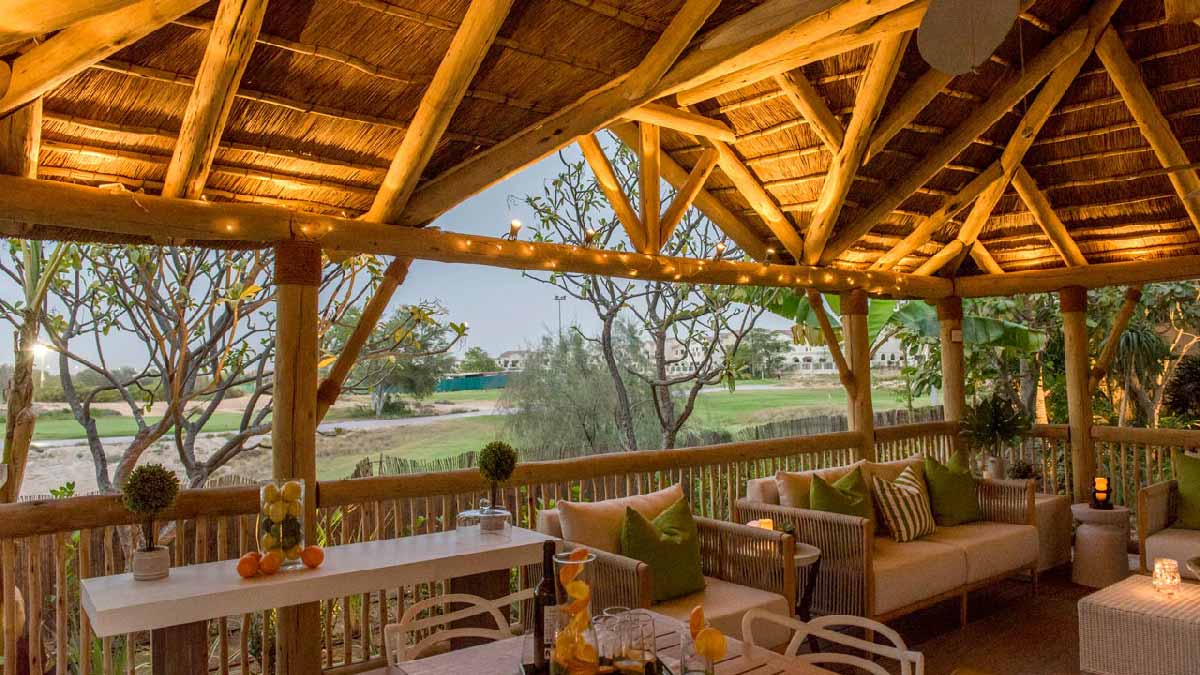
Mexican palapa or African thatch: what's the difference?
A Mexican palapa is an open-sided shelter roofed with dried palm leaves, the classic beach-bar look of Mexico's coast. An African thatched gazebo uses dense reed or grass instead, such as Cape Reed (Thamnochortus insignis) from South Africa. Both give natural, cooling shade, but reed thatch has a finer, denser texture and generally lasts longer than palm leaf, which needs replacing more often. Below we compare the two, then share 10 thatched gazebo ideas to inspire your own.
Palapa vs African thatch gazebo at a glance
| Mexican palapa | African (Cape Reed) thatch gazebo | |
|---|---|---|
| Roofing material | Dried palm leaves or fronds | Dense natural reed |
| Look | Loose, shaggy, tropical beach style | Neat, dense, textured finish |
| Typical setting | Beach bars, casual poolside shelters | Villas, resorts, restaurants and gardens |
| Durability | Palm leaf weathers relatively quickly and is replaced more often | Reed is denser and longer-lasting; 15 to 25 years in hot climates with care |
| Shape | Usually round or square with a conical roof | Round, square, gabled or bespoke shapes |
The Gulf has its own palm-frond tradition too: barasti, woven from date palm fronds, has shaded homes and souqs for generations. Cape Reed builds with barasti as well as reed, so you can choose the look that suits your space.
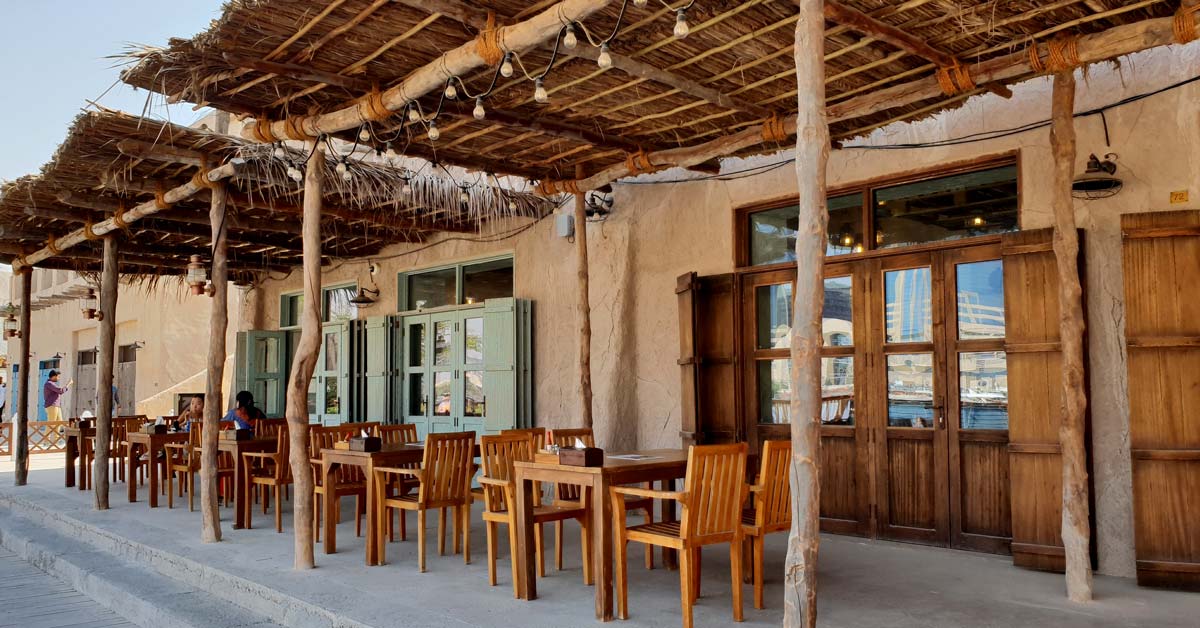
Which is better in a desert climate?
For permanent structures in the heat of the UAE and Saudi Arabia, dense reed thatch is usually the more durable choice. It insulates well, keeps the space beneath noticeably cooler, and holds its shape for years with simple care. Palm-leaf palapa roofs suit a casual, short-term beach look but need replacing more often. Whatever you choose, add fire-retardant protection such as Cape Reed Fireshield, because any natural roofing material is combustible untreated.
For a wider comparison of roofing materials, read Thatch vs Bamboo vs Synthetic.
10 thatched gazebo ideas
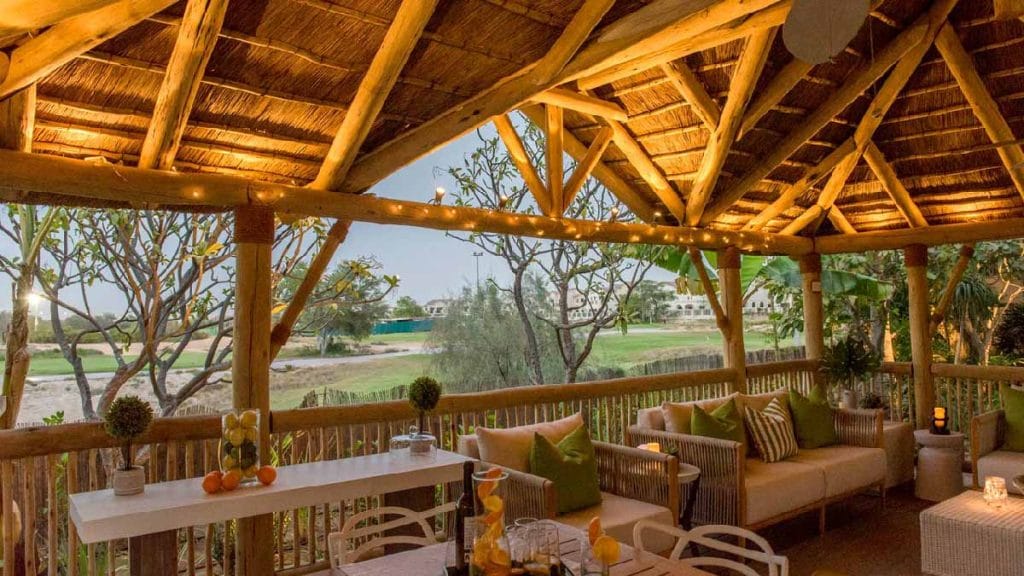
1. Relax on the deck
A thatched gazebo over timber decking creates an instant outdoor lounge, warm underfoot and cool overhead.
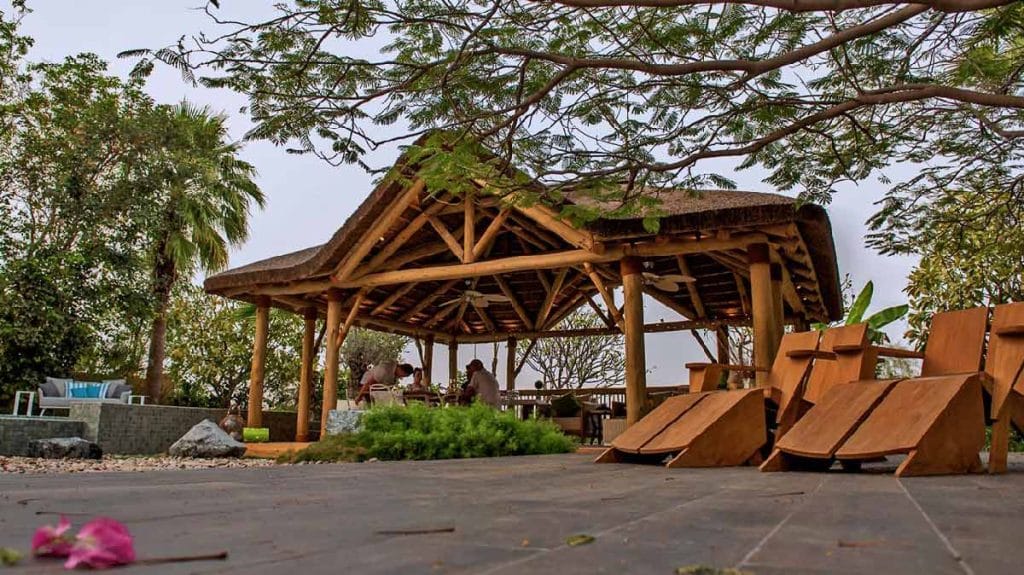
2. Soft, modern colours
Lighter timber tones give a thatched structure a modern yet rustic touch.
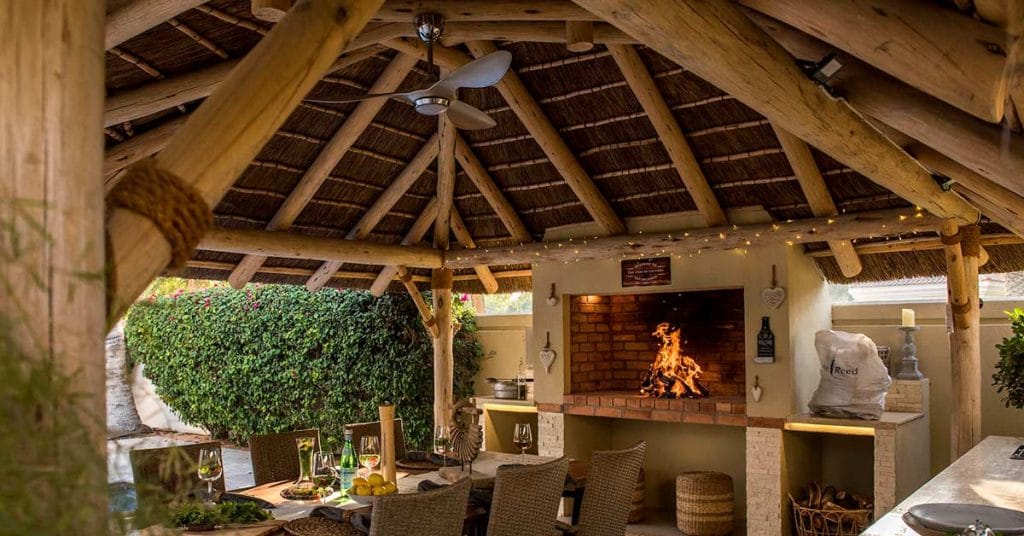
3. A gabled roof
A gabled thatched roof adds height and a striking silhouette, perfect for a garden focal point.
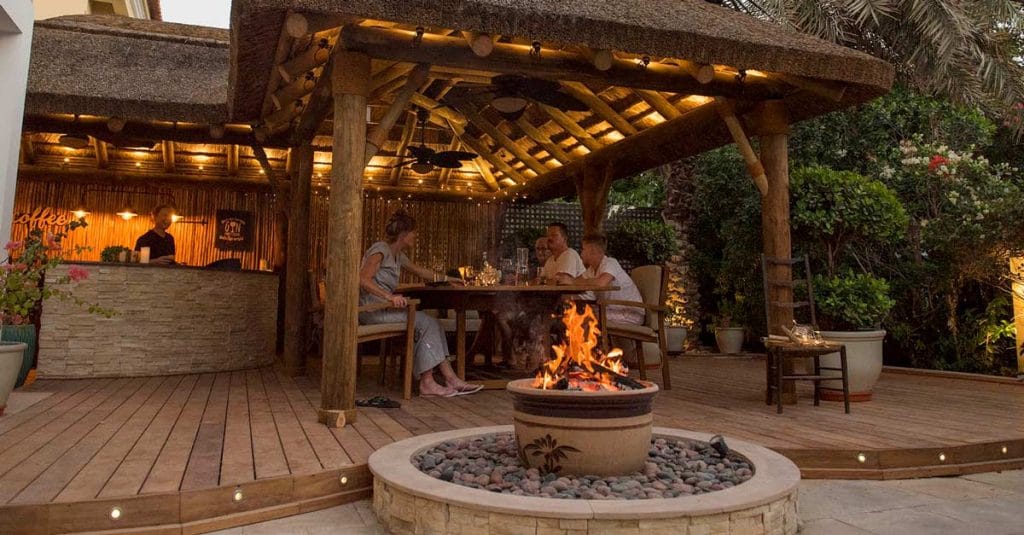
4. Decking and lath cladding
Lath cladding on the sides adds privacy and filtered light without closing the gazebo in.
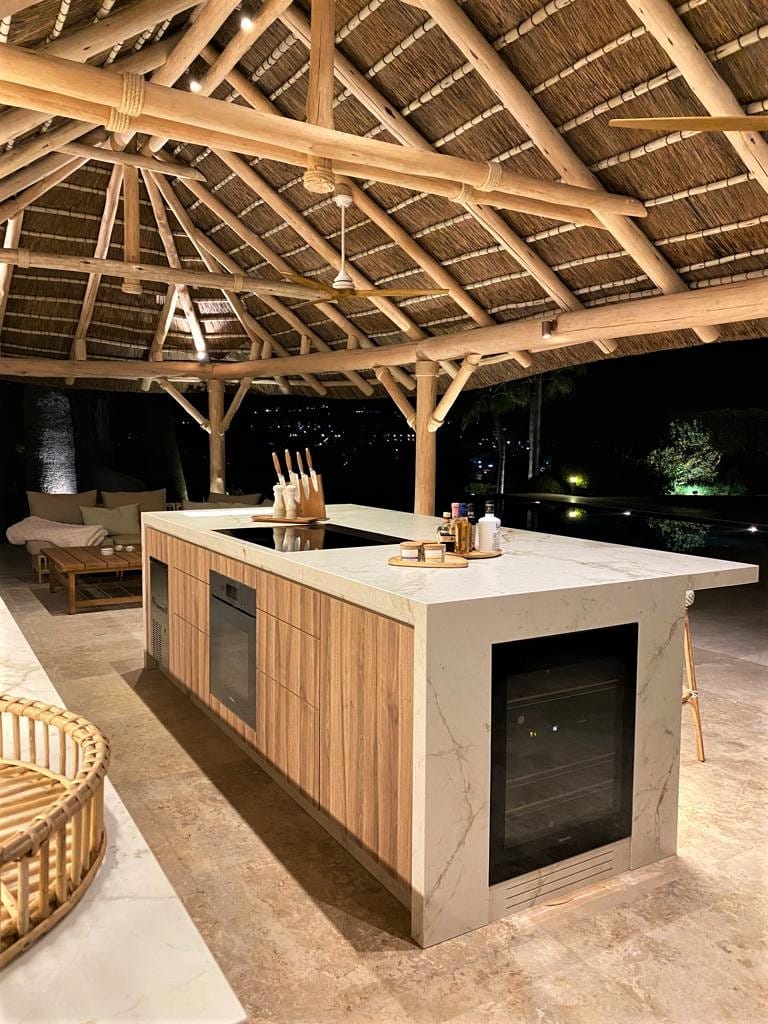
5. Mediterranean boho interiors
Layer rugs, cushions and rattan lighting for a luxurious Mediterranean boho feel under the thatch.
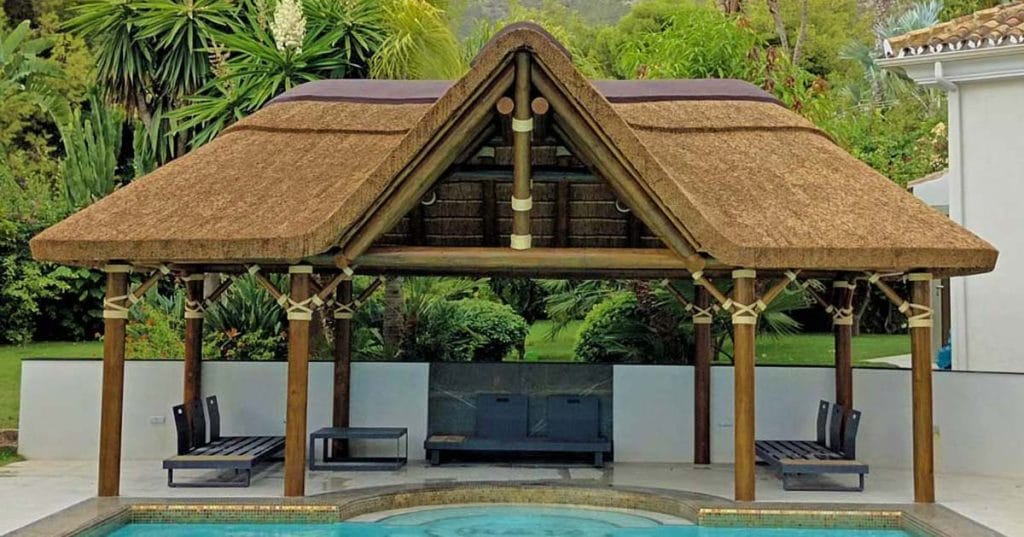
6. Poolside with a gabled entrance
A gabled entrance frames the view to the pool and makes the gazebo feel like a destination.
7. Modern thatch on concrete pillars
Concrete pillars give thatch a crisp, contemporary edge and open up cladding options.
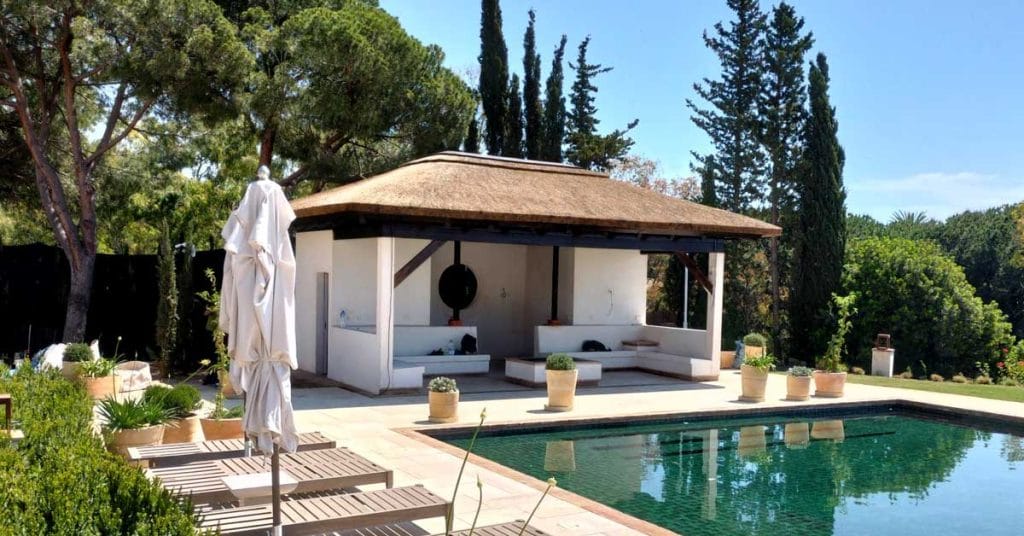
8. Whitewashed Mediterranean
A whitewashed frame under natural thatch creates an authentic, airy Mediterranean look.
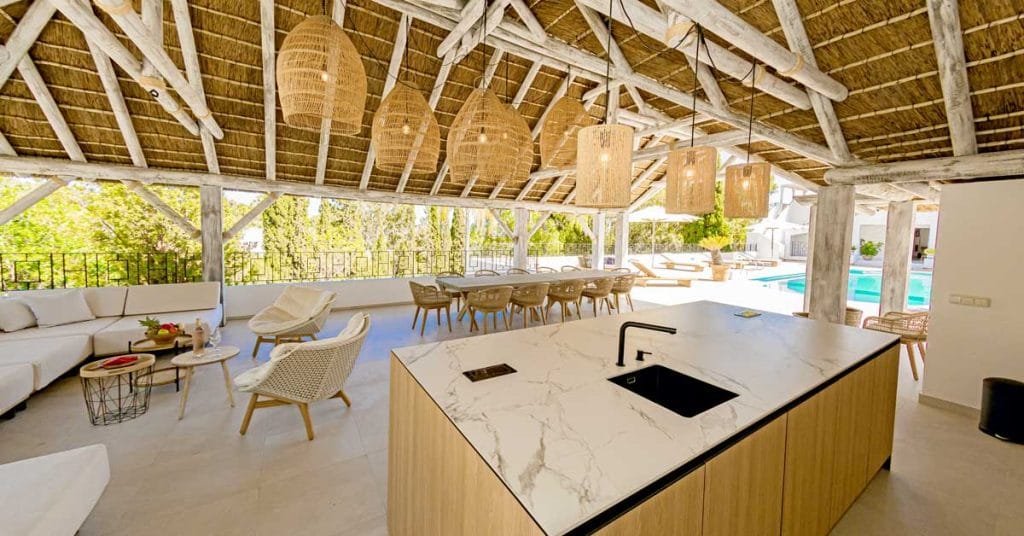
9. Laminated timber by the pool
Engineered laminated beams allow longer spans and clean lines for a large poolside structure.
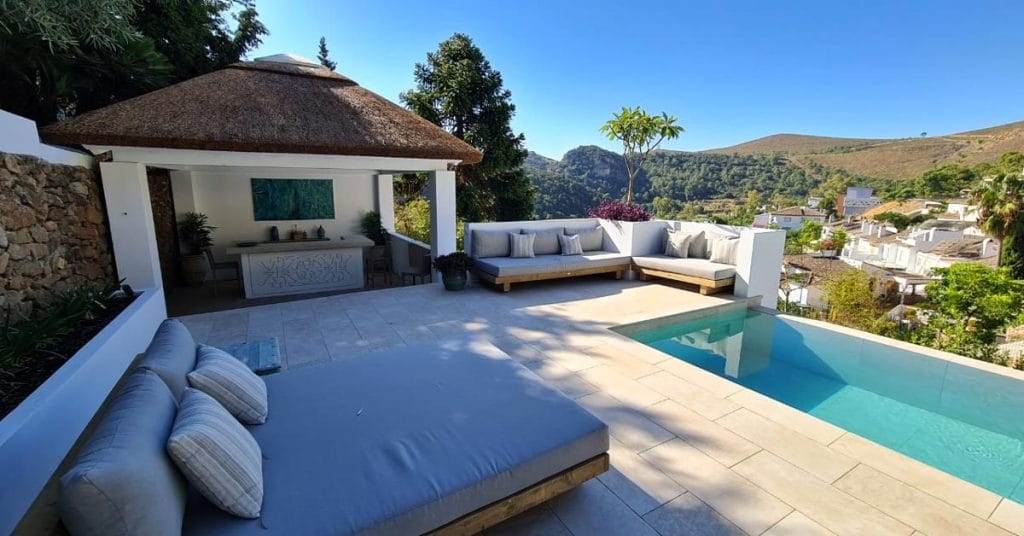
10. An outdoor kitchen gazebo
Build the kitchen in, and your gazebo becomes the heart of every gathering.
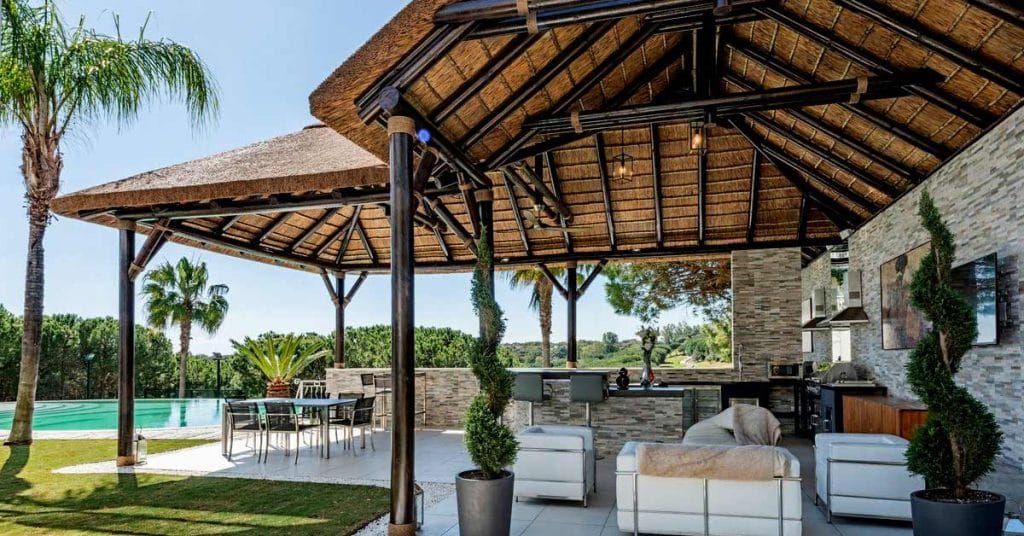
Thatched gazebo benefits
Thatched gazebos bring rustic character to any garden and adapt to almost any use: outdoor dining, entertaining, a quiet hideaway or a poolside bar. Thatch gives noticeably cooler shade than metal or timber roofs, and as a natural, renewable material it is an eco-friendly choice.
Caring for a thatched gazebo
Care is simple: an annual professional inspection, keeping the roof clear of sand and debris, keeping sprinklers and barbecues away from the thatch, and maintaining fire-retardant protection. Our guide to thatched roof maintenance in hot climates covers the full routine.
Frequently asked questions
What is a palapa?
A palapa is a traditional Mexican open-sided shelter with a roof of dried palm leaves, popular at beaches and resorts.
Can Cape Reed build a palapa-style gazebo?
Yes. We can create the open-sided, conical look of a palapa using durable natural reed, or barasti palm fronds for a more traditional Gulf feel.
What is the difference between a gazebo and a pergola?
A gazebo has a fixed, covered roof. A pergola has an open or slatted roof. Read more in What Is a Pergola?
Conclusion: choose the thatch that suits your space
Palapa style or African thatch, a natural roof turns any garden or poolside into a cool, characterful retreat. For lasting performance in Gulf heat, dense reed thatch is hard to beat.
Ready for your own thatched gazebo? Browse our thatched structures or talk to the Cape Reed team about a bespoke design.

About Cape Reed Team
Our expert team at Cape Reed Spain brings decades of experience in sustainable thatching and premium outdoor living solutions.
You Might Also Like
Discover more outdoor living inspiration
Pergola vs. Thatched Roof: Which Suits Your Dubai Outdoor Space?
Pergola or thatched roof — what’s the real difference? The core difference comes down to shade and enclosure: a pe...
What Is Thatch Roofing? Materials, Types & Why It’s Still Popular
What is thatch roofing? Thatch roofing is a roof covering made from dry vegetation — traditionally reed, straw, or palm ...
Luxury Outdoor Living in the UAE: The Complete Villa Garden Guide
There is a particular kind of satisfaction that comes from stepping out of your back door into a space that genuinely ta...