What is thatch roofing?
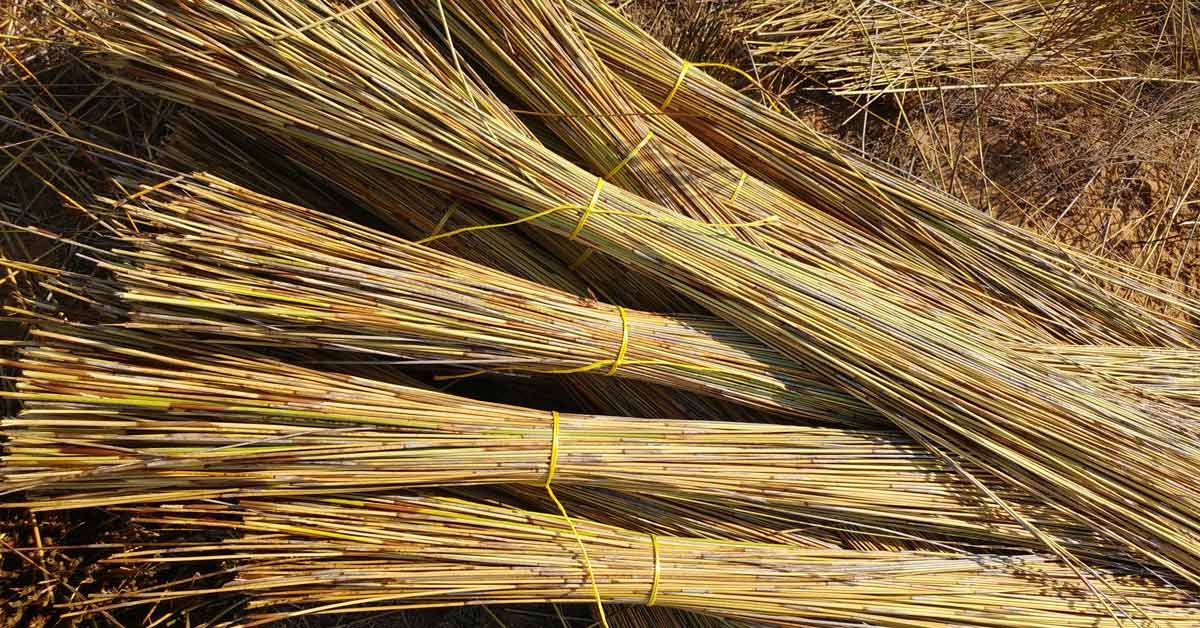
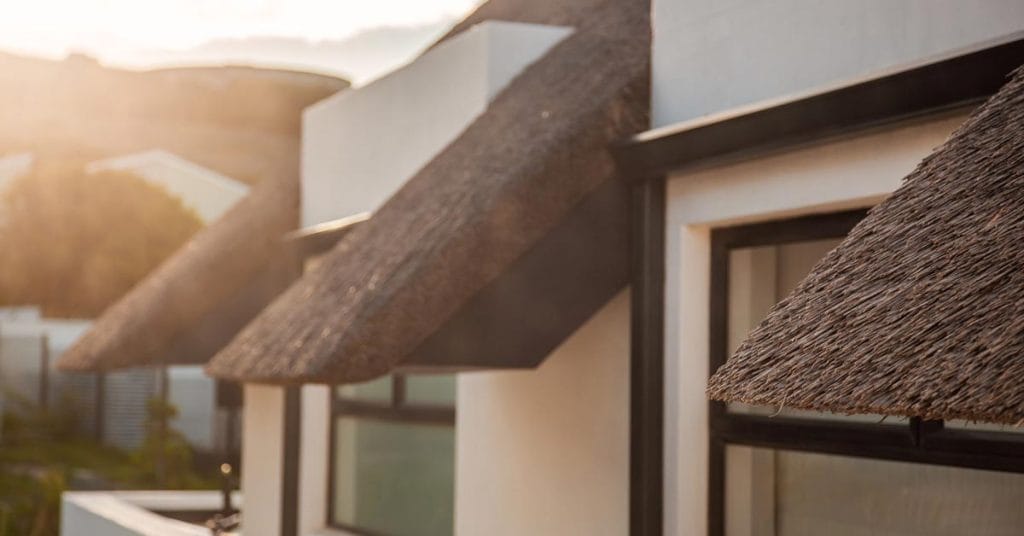
Thatch roofing is a roof covering made from dry vegetation — traditionally reed, straw, or palm leaf — layered densely enough to shed water and provide natural insulation. It’s one of the oldest roofing methods in the world, used across cultures from rural England to coastal Africa to Southeast Asia, and it remains popular today for the natural aesthetic and thermal performance it brings to outdoor and luxury architecture.
Far from being an outdated technique, thatch roofing has found a strong second life in high-end hospitality and residential design — largely because nothing manufactured quite replicates its texture, warmth, or the way it ages naturally into a structure’s surroundings.
What is thatch made of?
The material varies significantly by region and supplier, which is part of why “thatch” can mean very different things depending on where you are:
- Water reed – common in European thatching traditions
- Palm leaf – widely used in tropical and coastal regions
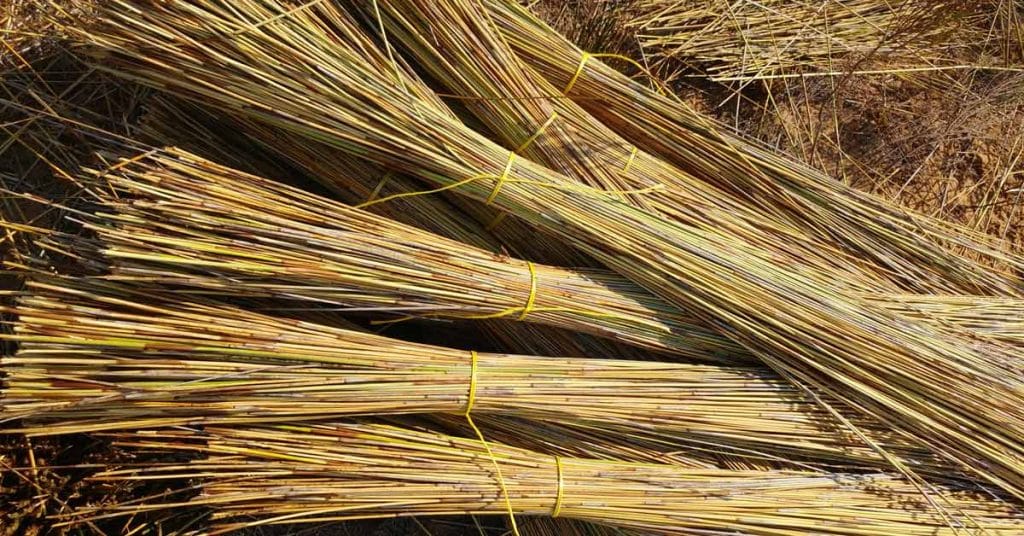
- Cape reed (Thamnochortus insignis) – a dense, durable reed native to South Africa’s fynbos region, used by Cape Reed for its resistance to weathering and rot
- Synthetic thatch – engineered fiber designed to visually replicate natural thatch while offering more predictable long-term performance, particularly for commercial and hospitality applications
Not all thatch materials perform equally. Density, fiber structure, and how the material is harvested and treated all affect water-shedding ability, insect resistance, and lifespan — which is why sourcing matters as much as the roofing technique itself.
What does a “roof thatcher” actually do?
A roof thatcher is a specialist tradesperson trained in laying, fixing, and maintaining thatch roofing — a skill that, in many regions, is passed down through apprenticeship rather than formal certification. The work involves far more than laying material on a frame: a skilled thatcher accounts for pitch, ventilation, water runoff, and regional climate to ensure the roof performs for years rather than degrading within a single season.
This is also where quality varies enormously between providers. Because thatching is a specialized craft, the difference between a roof that lasts five years and one that lasts twenty-five often comes down to the expertise of the thatcher, not just the material.
Types of thatched structures
Thatch isn’t limited to full residential roofs. Common applications include:
- Residential roofing — full or partial thatched roofs on homes
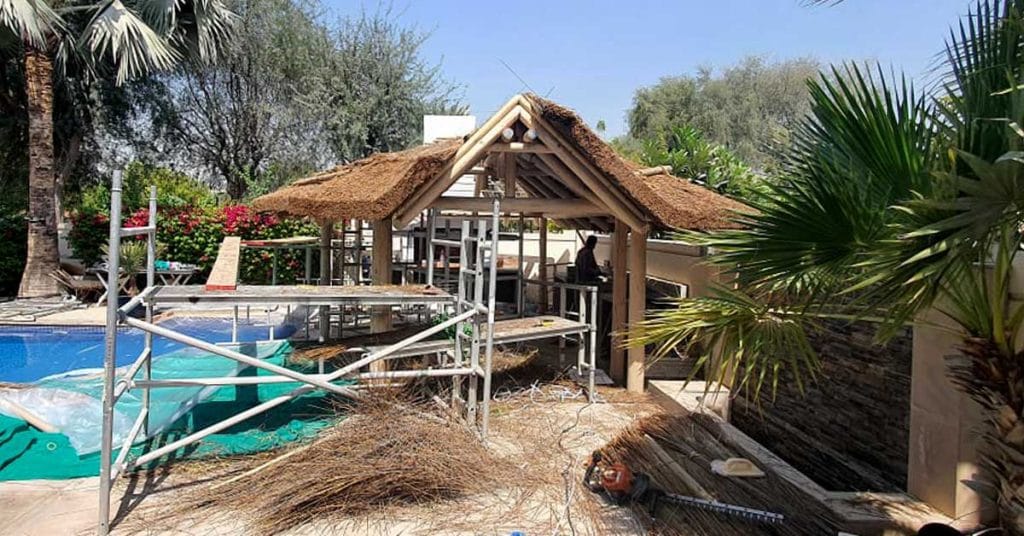
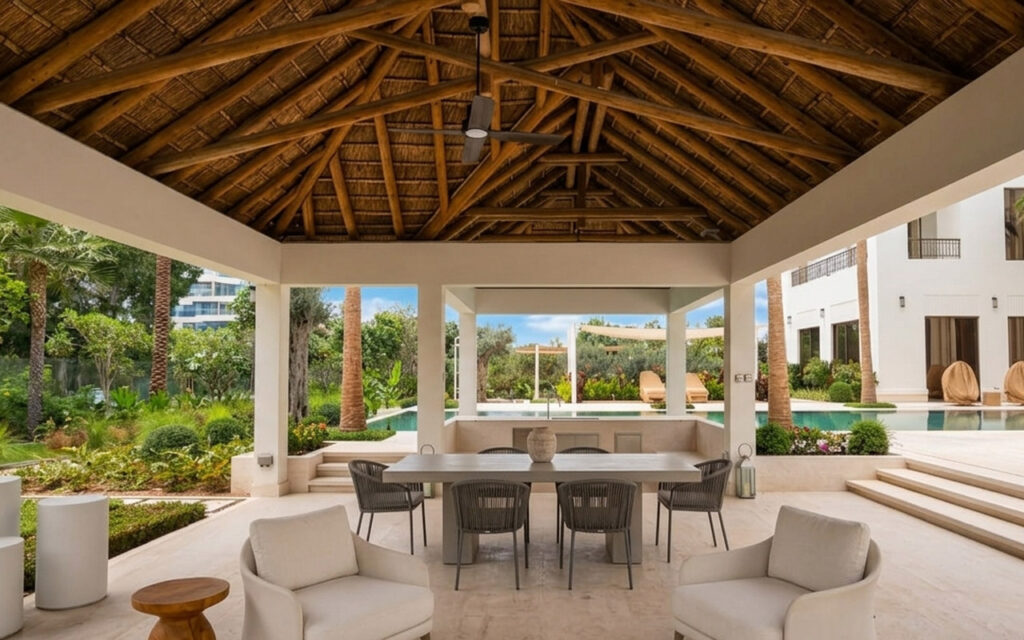
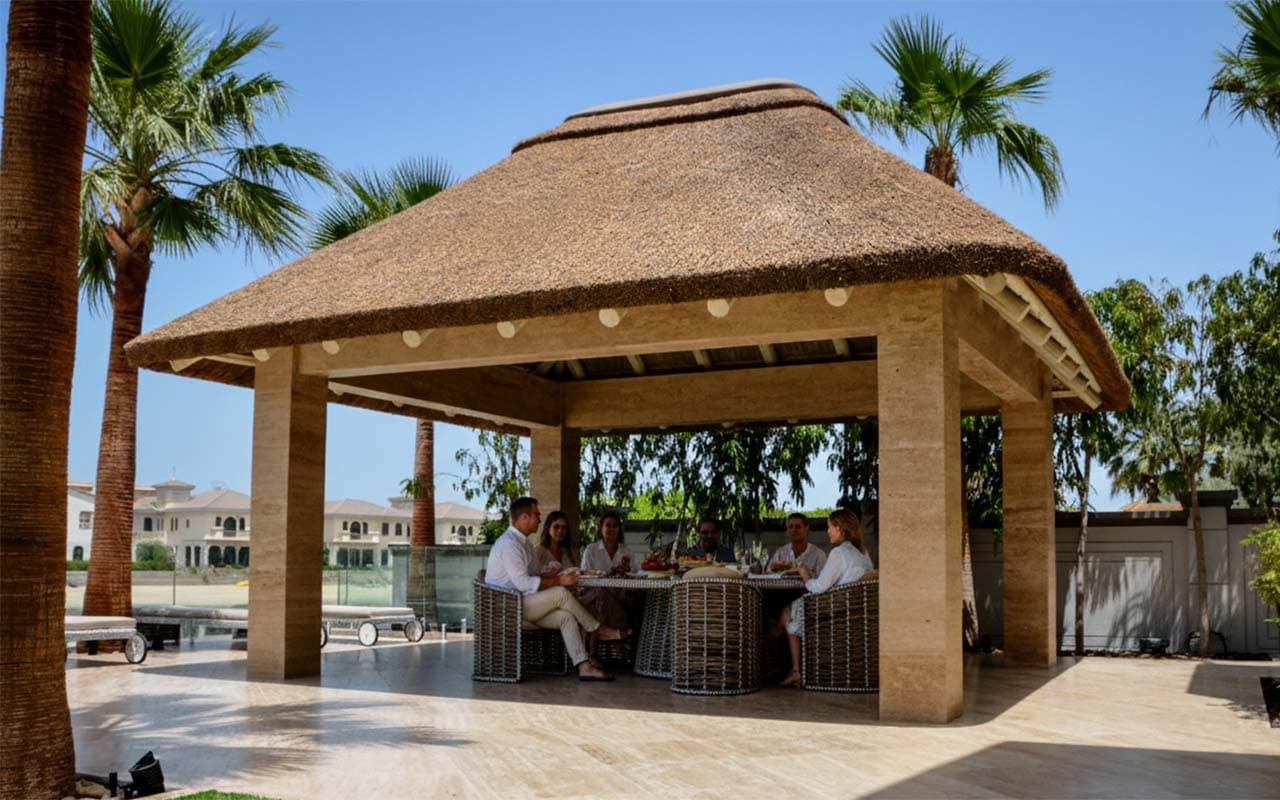
- Gazebos and pergolas — a popular way to bring thatch into a garden or resort setting without a full roofing commitment
- Poolside cabanas and bars — especially common in hospitality and resort design
- Play structures — thatched roofing for children’s play areas, offering natural shade
- Commercial and hospitality structures — large-scale thatched roofing for resorts, restaurants, and leisure destinations
Why thatch roofing is still popular today?
Natural insulation. Thatch’s dense, layered structure traps air, keeping interiors cooler in summer and warmer in winter compared to many conventional roofing materials — a genuine advantage in hot climates like the Gulf.
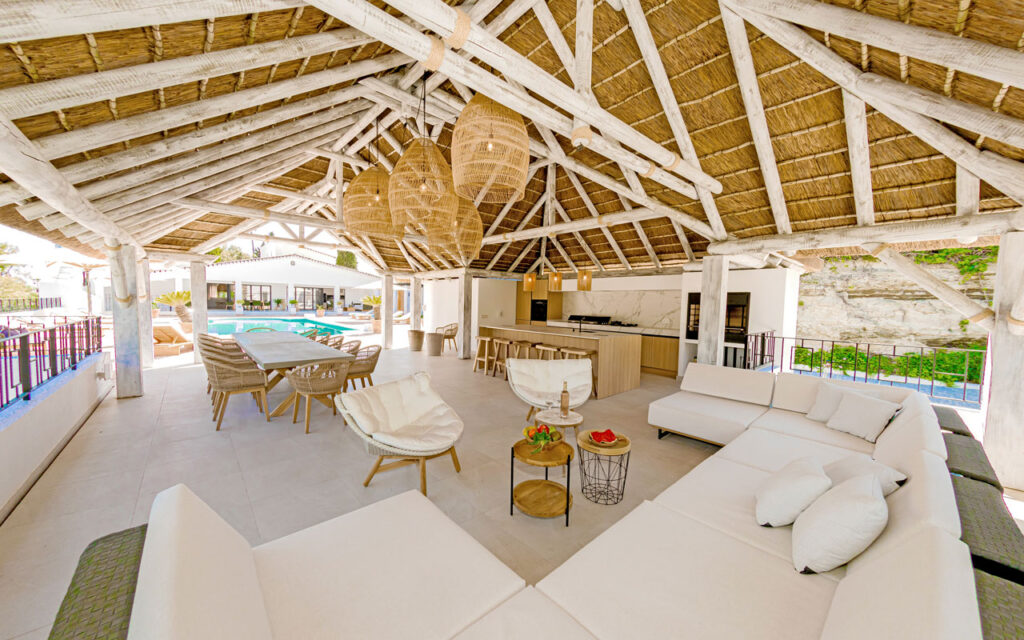
Aesthetic warmth. Thatch brings a natural, organic texture that’s difficult to replicate with manufactured materials, which is why it remains a signature choice for luxury outdoor living and hospitality design.
Sustainability. Natural thatch is a renewable material, and when responsibly sourced, it carries a far lighter environmental footprint than many manufactured roofing alternatives. Design versatility. From traditional cottages to ultra-modern resort architecture, thatch adapts to a wide range of design languages — it’s as at home on a contemporary Dubai rooftop lounge as on a coastal cottage.
Is thatch roofing right for your project?
Thatch works best when it’s specified by someone who understands the climate it’s going into. A roof that performs beautifully in a temperate European setting may need an entirely different approach — different pitch, different material, different fire treatment — to perform the same way in Saudi Arabia’s heat or Spain’s coastal humidity. That’s the gap a specialist thatching company is built to close.
If you’re planning a project, Cape Reed International is ready to support you with expertise, craftsmanship, and a proven track record.
👉 Explore our projects
👉 Get in touch with our team
Cape Reed International
Exclusive Living, Naturally

About Cape Reed Team
Our expert team at Cape Reed Spain brings decades of experience in sustainable thatching and premium outdoor living solutions.
You Might Also Like
Discover more outdoor living inspiration
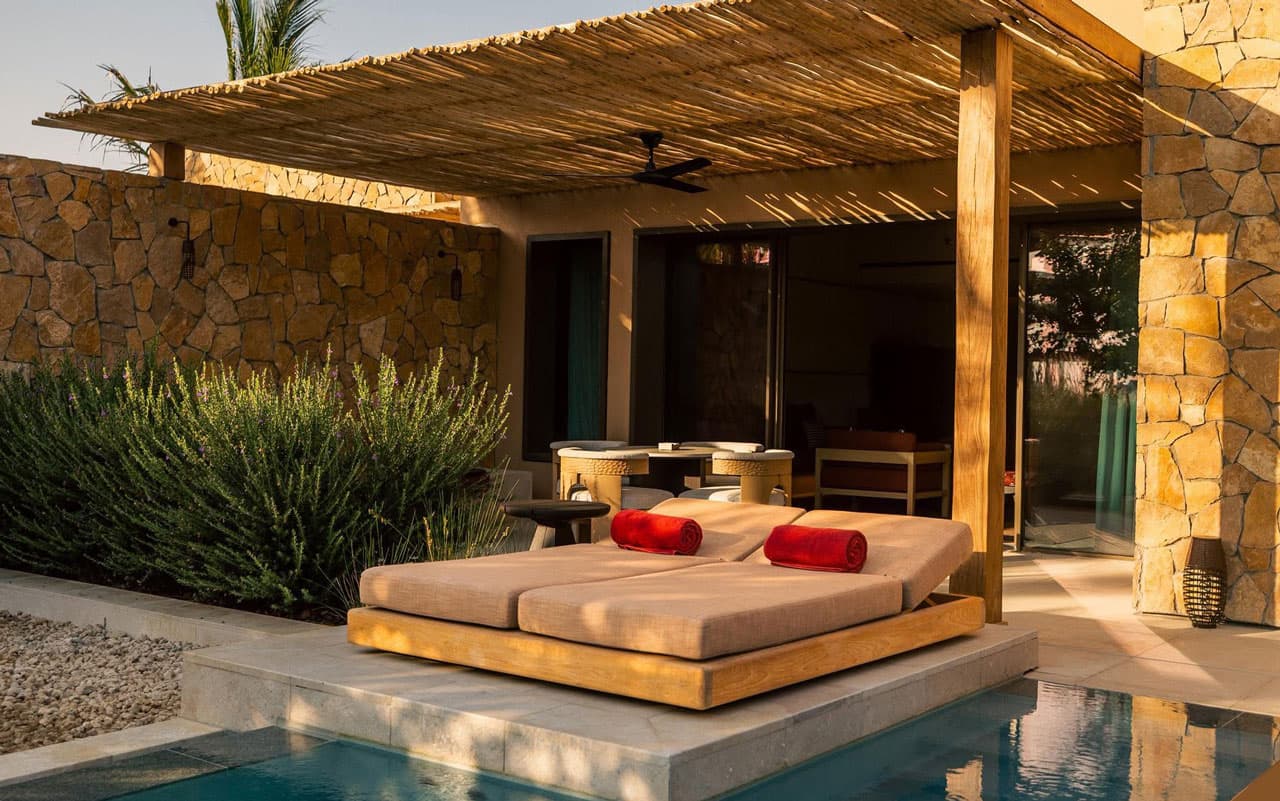
Pergola vs. Thatched Roof: Which Suits Your Dubai Outdoor Space?
Pergola or thatched roof — what’s the real difference? The core difference comes down to shade and enclosure: a pe...
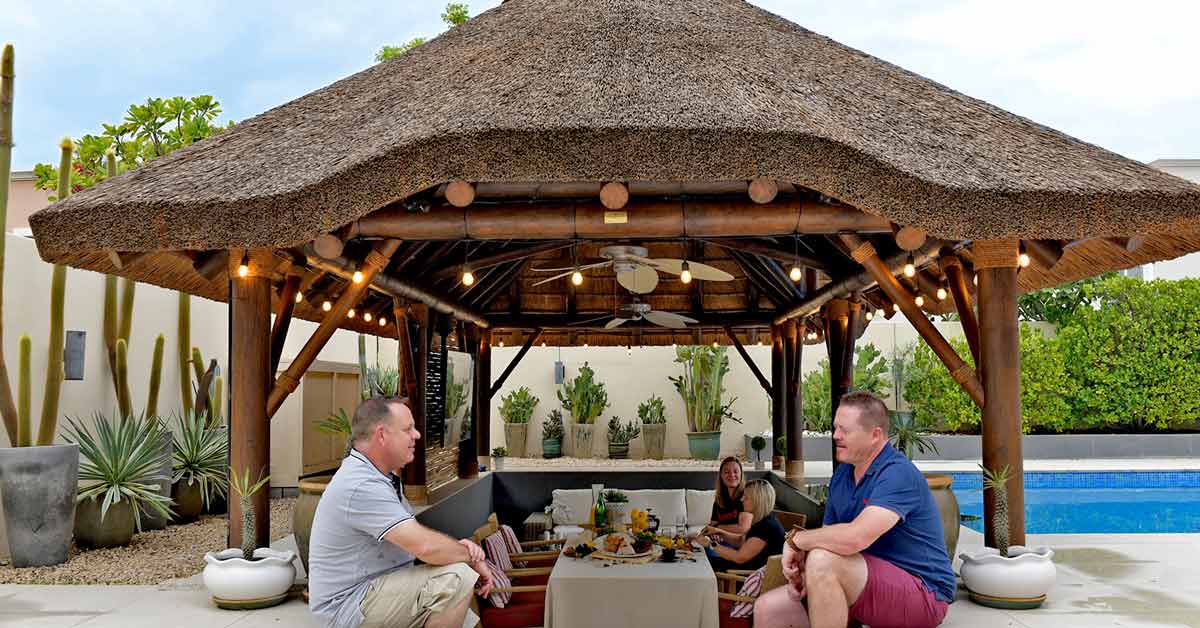
Luxury Outdoor Living in the UAE: The Complete Villa Garden Guide
There is a particular kind of satisfaction that comes from stepping out of your back door into a space that genuinely ta...
Thatch vs Bamboo vs Synthetic: Choosing the Right Natural Material for Outdoor Structures
When designing an outdoor structure, the material you choose plays a major role in aesthetics, comfort, durability, and ...