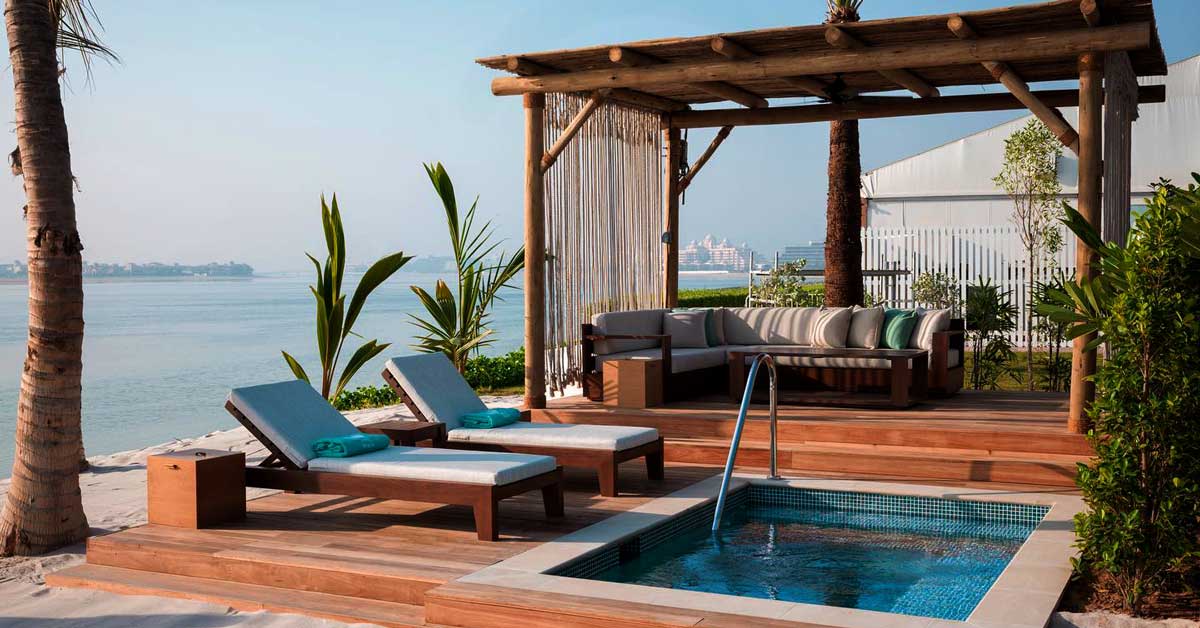
What is the best timber decking for Dubai?
The best timber decking for Dubai is a dense, naturally durable or properly treated wood that stays stable through extreme heat, intense UV and coastal humidity, installed with good ventilation underneath and finished with a UV-protective oil. In this climate, the right species, the right installation and a simple care routine matter as much as how the deck looks on day one.
Picture it: barefoot steps from the pool to the shade, a long table set for friends as the sun drops over the water, kids running the length of the terrace. A timber deck is where outdoor life in Dubai actually happens, and it should feel as good underfoot in August as it does in January.
Cape Reed has built timber decks, walkways and terraces across the UAE, including the pergola and decking at White Beach, Atlantis. This guide covers what we have learned about making timber decking work in the Gulf.
Why is Dubai's climate tough on decking?
Timber is a natural material, and it responds to its surroundings. Dubai asks more of it than most climates do.
- Extreme heat. Long summers and hot surfaces dry the wood, and repeated heating and cooling makes boards expand and contract. Poorly chosen or poorly fixed timber is more likely to crack, cup or twist.
- Intense UV. Year-round sun breaks down the wood's surface and fades its colour. Untreated timber naturally weathers to silver-grey; a UV-protective oil keeps the warmer tone for longer.
- Humidity and salt. Coastal homes, beach clubs and marina properties see humid summers and salt in the air, which a deck has to handle on top of the heat.
- Sand and irrigation. Wind-blown sand acts like fine sandpaper on the surface, and garden sprinklers that keep one area damp encourage staining and decay.
None of this rules timber out. It simply means wood choice, installation and care need to be planned for the Gulf, not copied from a cooler climate.
Which wood works best for decking in the heat?
There is no single "best" timber for every site, but the woods that perform well in Dubai share a few qualities. When you compare options, look for:
- Density and hardness. Denser timbers resist wear from foot traffic, furniture and sand, and tend to move less as temperatures swing.
- Natural durability or proper treatment. Some species are naturally resistant to rot and insects thanks to their oils and density; others need pressure treatment to perform outdoors. Either can work if it suits the setting.
- Stability. Well-dried, well-graded boards are less likely to cup, split or twist in the heat.
- Responsible sourcing. Ask where the timber comes from and how it is certified. A beautiful deck should not come at the cost of a forest.
Your Cape Reed team will recommend a species based on where the deck is going: a shaded courtyard, an exposed rooftop and a beachfront walkway each call for something different.
Timber or composite decking?
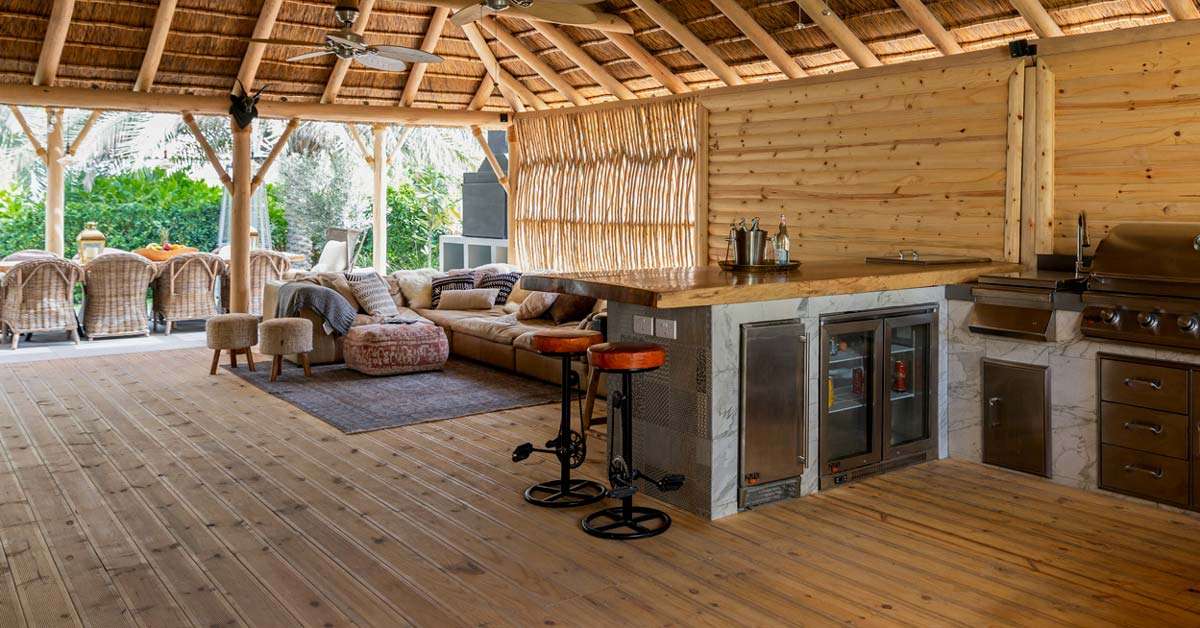
Composite boards are often sold as the low-maintenance choice, but in Dubai there are trade-offs to weigh. Many composites can feel hotter underfoot than timber in direct sun, and they do not age with the same natural character. Timber, by contrast, offers the warmth, grain and texture that suits luxury villas, resorts and thatched structures, and it pairs naturally with Cape Reed pergolas and gazebos. If you love the look and feel of real wood, timber is worth the small amount of care it asks for.
How should a deck be designed and installed for Dubai?
A well-chosen timber can still fail if it is installed badly. These details make the difference in the Gulf:
- Ventilation underneath. Air needs to move beneath the boards so they dry evenly and do not trap heat or moisture. Raised substructures help.
- Room to move. Boards are spaced and fixed so they can expand and contract with the temperature without cupping or popping their fixings.
- Stainless or coated fixings. Near the coast especially, corrosion-resistant screws and clips prevent rust stains and loosening.
- Drainage. Pool surrounds and terraces need water to run away quickly rather than pool on or under the deck.
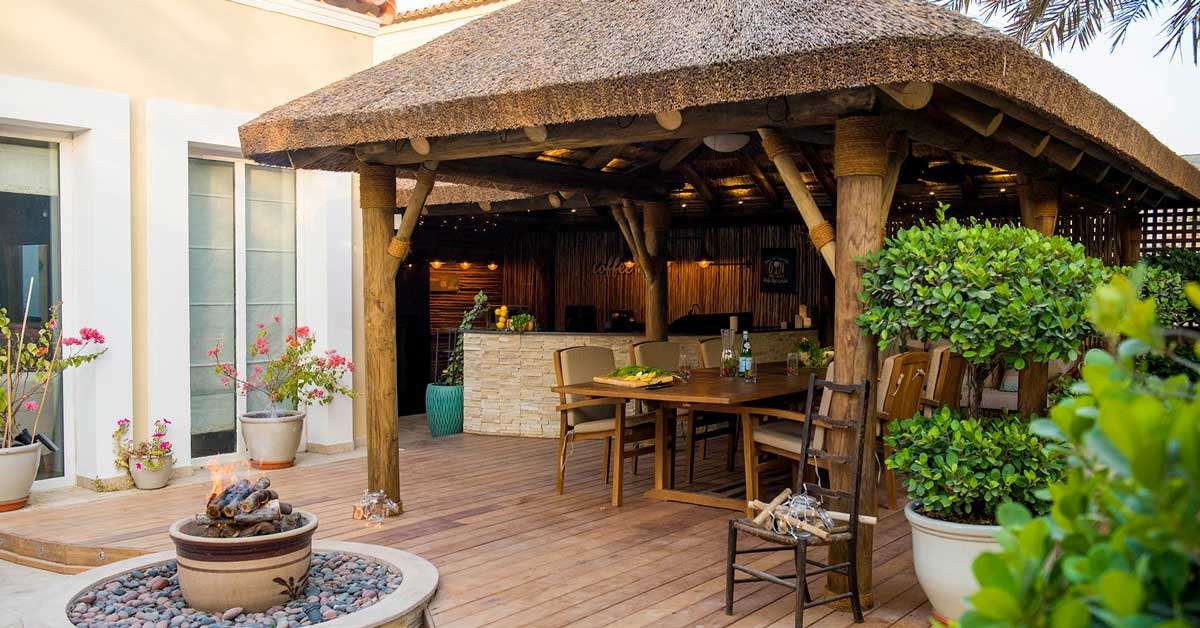
- Shade. Pairing your deck with a pergola, thatched gazebo or other shade structure keeps the surface cooler underfoot and slows UV weathering. Not sure which suits your space? Read Pergola vs. Thatched Roof.
This is where working with one team for the deck and the structure above it pays off: the two are designed together, so levels, drainage and shade all line up.
How do you look after timber decking in Dubai?
Timber decking needs little more than regular cleaning and a protective oil, but in the Gulf the timing matters.
| When | What to do |
|---|---|
| Weekly or as needed | Sweep away sand, leaves and debris, especially from the gaps between boards |
| Every few months | Wash with mild soap and water and a soft brush; avoid high-pressure washers, which can raise the grain |
| Once a year, before summer | Re-oil or reseal with a UV-protective finish to keep colour and protection |
| Ongoing | Angle sprinklers away from the deck, use furniture pads, and check for loose fixings |
For more on why timber is a lasting, sustainable choice, see Sustainable Decking for Outdoor Living. If your deck sits under a thatched roof, our guide to maintaining a thatched roof in hot, dry climates covers the structure above it.
Frequently asked questions
Does timber decking get too hot to walk on in Dubai?
Timber warms up in direct sun like any outdoor surface, but it generally stays more comfortable underfoot than stone, tile or many composites. Shading the deck with a pergola or thatched structure, and choosing a lighter-toned finish, keeps it noticeably cooler on summer afternoons.
Can timber decking be used around a pool?
Yes. Timber is a popular choice for pool surrounds because it feels natural underfoot. Choose a durable or properly treated species, ask for a slip-resistant finish, and make sure the deck is designed to drain and ventilate so splashes dry quickly.
When is the best time to build a deck in Dubai?
Most homeowners plan their decks for the cooler months, from autumn through spring, so the space is ready for outdoor season. Starting the design conversation early gives time to choose materials and plan any shade structures alongside the deck.
Conclusion: a deck built for the way you live
Timber decking in Dubai works beautifully when it is planned for the climate: the right wood for your site, installation that lets it breathe and move, shade where you need it, and a simple yearly care routine. Get those right, and your deck becomes the place where everyday life slows down.
From private villa terraces to beach clubs and resorts, Cape Reed designs and builds timber decking together with the pergolas and thatched structures that shade it, so every part of your outdoor space works as one.
Planning a deck for this season? Talk to the Cape Reed UAE team about your space today.

About Cape Reed Team
Our expert team at Cape Reed Spain brings decades of experience in sustainable thatching and premium outdoor living solutions.
You Might Also Like
Discover more outdoor living inspiration
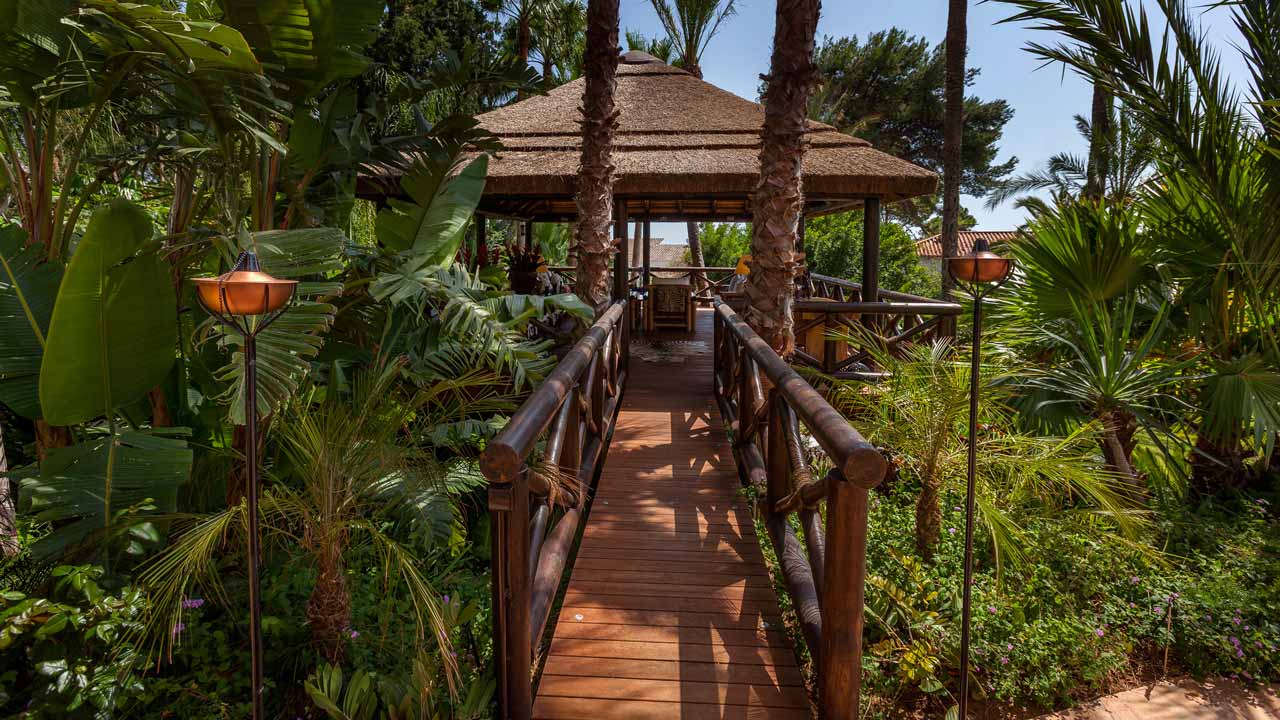
Sustainable Decking for Outdoor Living: Why Timber Is the Smart Choice
Outdoor living spaces are more than just extensions of your home — they’re where memories are made, guests are entertain...
Timber vs Composite (WPC) Decking: An Honest Comparison
Timber or composite (WPC) decking? An honest comparison of look and feel, heat underfoot, maintenance, sustainability an...