Timber or composite decking: which is better?
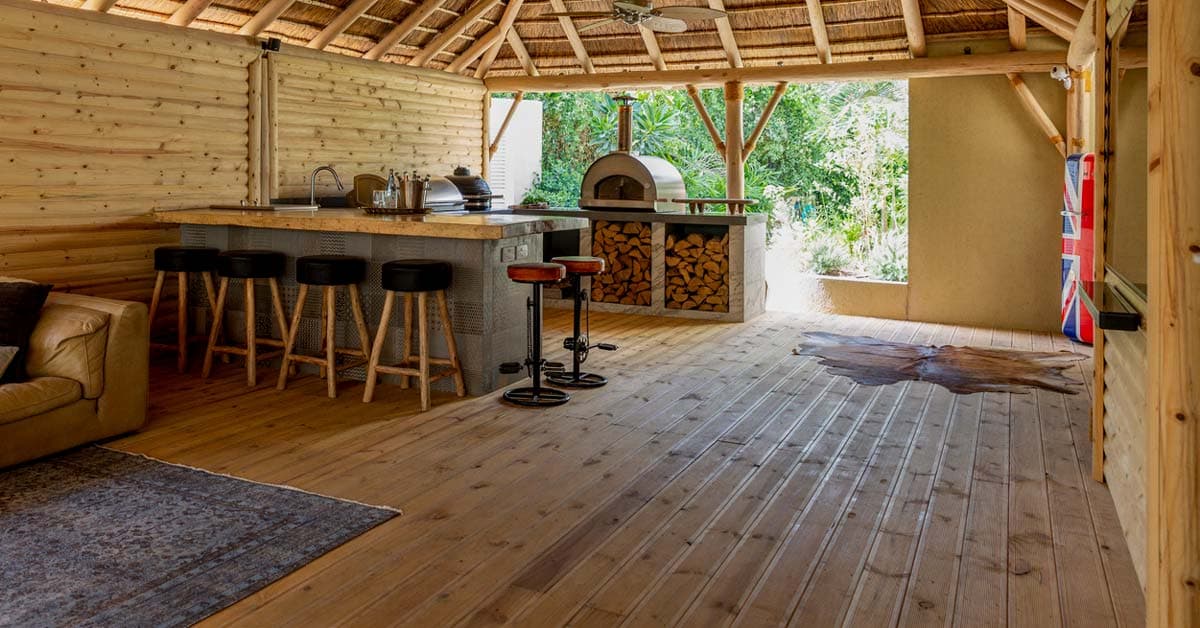
Neither is better for everyone. Timber decking offers natural warmth, a real-wood look and feel, and can be sanded and refinished, but it needs regular cleaning and oiling. Composite (WPC) decking needs less routine care and keeps a consistent colour, but it can feel hotter underfoot in direct sun, cannot be refinished, and lacks the character of real wood. In hot climates like the Gulf, heat underfoot and how the deck pairs with natural structures often tip the balance towards timber, while those who want minimal upkeep may prefer composite.
Search "decking Dubai" and you'll quickly meet both options. Here is an honest, side-by-side comparison to help you choose.
What is composite (WPC) decking?
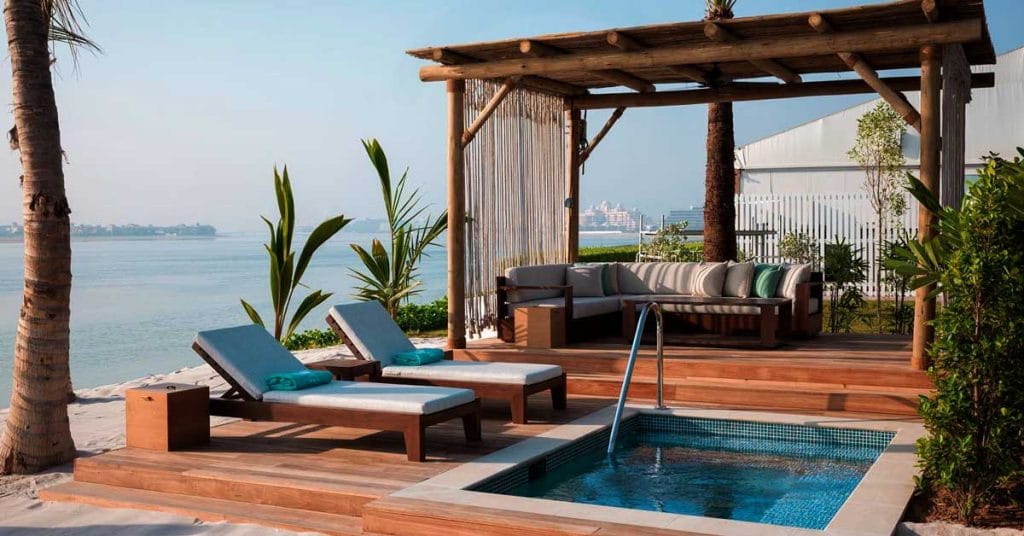
WPC stands for wood-plastic composite: boards made from a blend of wood fibres and plastic, often including recycled material. They are designed to look like timber while resisting rot and avoiding the need for oiling.
Timber vs composite decking at a glance
| Timber decking | Composite (WPC) decking | |
|---|---|---|
| Look and feel | Real grain and texture; every board unique | Uniform, wood-effect finish |
| Heat underfoot | Generally more comfortable in direct sun | Many boards, especially dark ones, can get very hot in direct sun |
| Maintenance | Regular cleaning and periodic oiling | Cleaning only; no oiling |
| Ageing | Weathers to silver-grey unless oiled; can be sanded and refinished | Can fade over time; cannot be sanded or refinished |
| Sustainability | Renewable when responsibly sourced; stores carbon | Often uses recycled content, but the plastic blend is harder to recycle at end of life |
| Pairs with | Thatch, timber pergolas and natural landscapes | Contemporary, low-maintenance schemes |
Heat underfoot: the big question in the Gulf
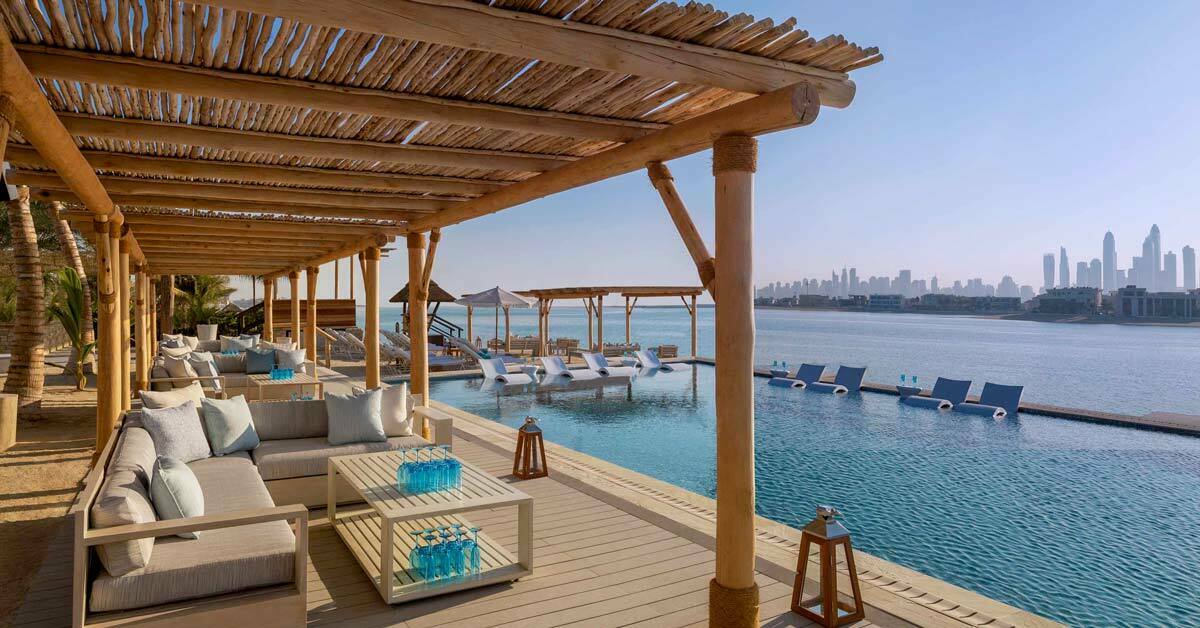
In the UAE and Saudi Arabia, how hot a deck gets matters as much as how it looks. Many composite boards absorb and hold heat in direct sun, particularly in darker colours. Timber generally stays more comfortable underfoot. Whatever you choose, shade makes the biggest difference: a pergola or thatched gazebo over the deck keeps the surface cooler and slows weathering.
Look and feel
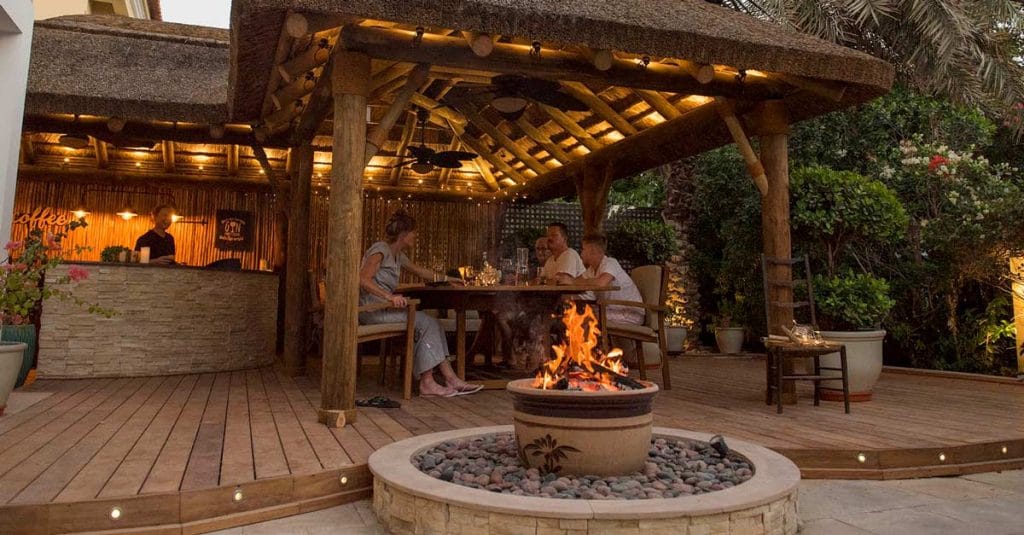
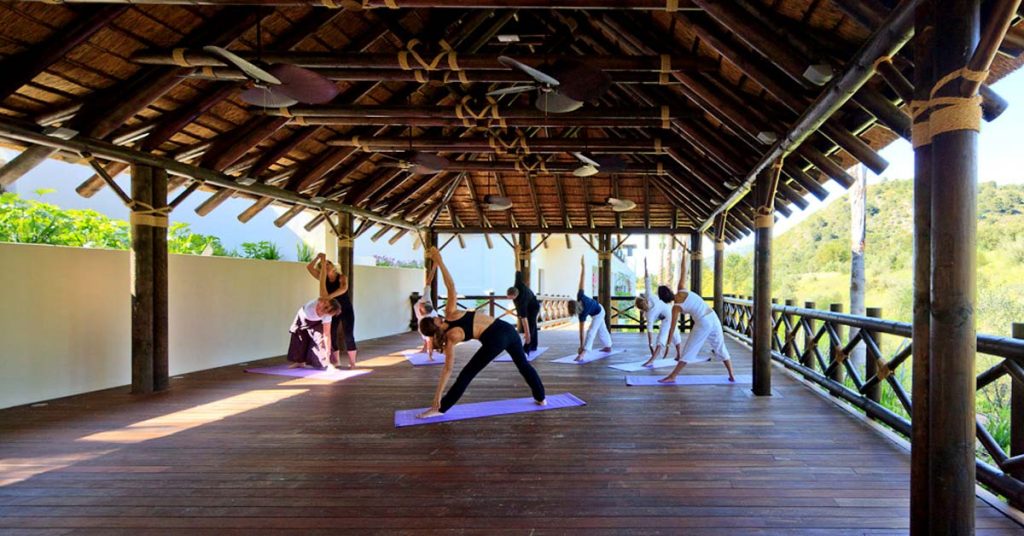
Real timber has natural grain, colour variation and texture that change and mature over time. That character is why timber decking is the choice for many luxury villas, resorts and wellness spaces, such as the timber-decked yoga studio at the Shanti-Som well-being retreat. Composite gives a more uniform, manufactured look that suits some contemporary designs.
Maintenance
This is composite's strongest point. It needs washing but no oiling. Timber needs a little more care: sweeping, occasional washing and a protective oil, typically once a year in hot climates. In return, timber can be sanded and refinished to look new again, which composite cannot.
Sustainability
Responsibly sourced timber is renewable and stores carbon for its whole life. All Cape Reed structural timber is harvested from sustainable forests and pressure treated for durability. Composite often uses recycled materials, which is a plus, but its plastic content makes end-of-life recycling more difficult. Read more about why sustainable timber matters.
Durability and lifespan
Both can last for many years when properly installed. For timber, durability depends on the species and treatment: dense, naturally durable woods and pressure-treated timbers both perform well outdoors. For any deck, good ventilation underneath, correct board spacing, corrosion-resistant fixings and drainage matter as much as the board itself.
Which should you choose?
Choose timber if: you want the real look and feel of wood, comfort underfoot in the sun, a deck that pairs naturally with thatch or timber pergolas, and the option to refinish it in future.
Choose composite if: minimal maintenance is your top priority, you prefer a uniform look, and the deck will be well shaded.
Frequently asked questions
What does WPC mean in decking?
WPC stands for wood-plastic composite, a board made from wood fibres and plastic designed to look like timber.
Does composite decking get hot?
Many composite boards can get very hot in direct sun, especially darker colours. Shading the deck helps whichever material you choose.
Is timber decking high maintenance?
Not really. Regular sweeping, occasional washing and a yearly protective oil keep timber decking looking good. See Why Timber Decking Is Worth It.
Can timber decking be used around pools?
Yes. Choose a durable or treated species with a slip-resistant finish, and make sure the deck drains and ventilates well.
Conclusion: choose the deck that suits how you live
Composite wins on low maintenance; timber wins on natural beauty, comfort underfoot and the way it pairs with natural structures. For many Gulf homes and resorts, especially those with thatch or timber pergolas, timber remains the natural choice.
Planning a deck? Explore Cape Reed timber decking, see more decking ideas, or talk to our team about your space.

About Cape Reed Team
Our expert team at Cape Reed Spain brings decades of experience in sustainable thatching and premium outdoor living solutions.
You Might Also Like
Discover more outdoor living inspiration
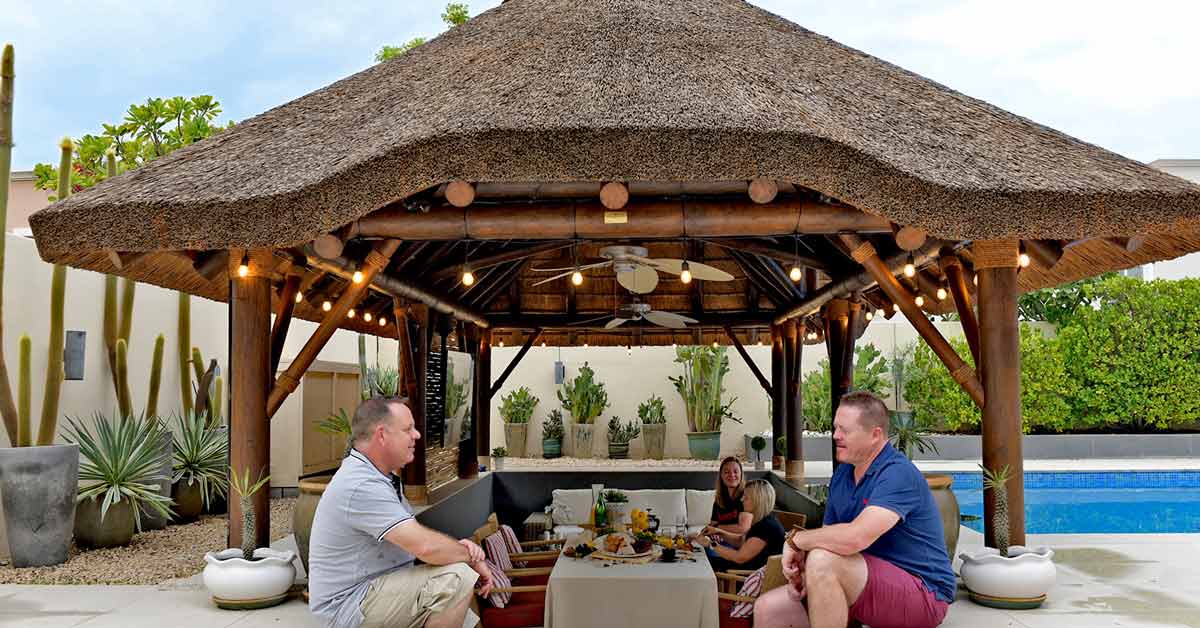
Luxury Outdoor Living in the UAE: The Complete Villa Garden Guide
There is a particular kind of satisfaction that comes from stepping out of your back door into a space that genuinely ta...
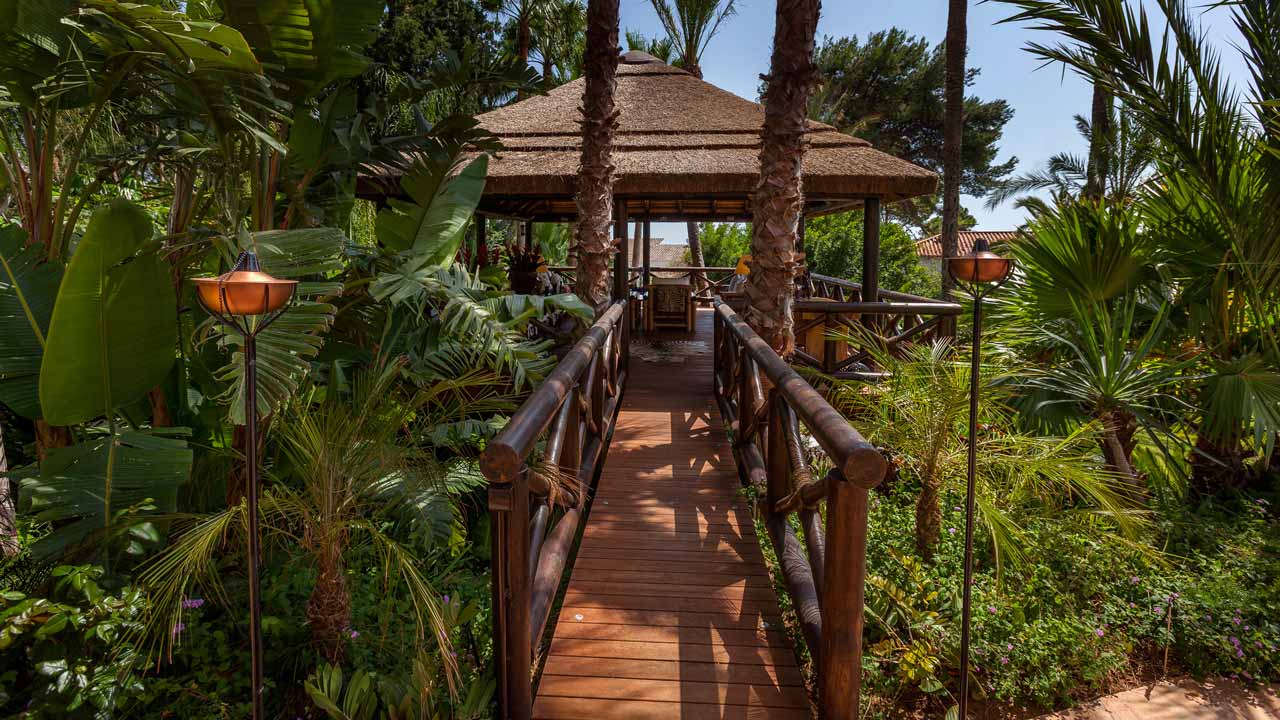
Sustainable Decking for Outdoor Living: Why Timber Is the Smart Choice
Outdoor living spaces are more than just extensions of your home — they’re where memories are made, guests are entertain...
7 Outdoor Ideas To Get Your Home Summer Ready
Summer in Spain is a time of vibrant life and breathtaking beauty. With a pleasant climate and stunning natural surround...